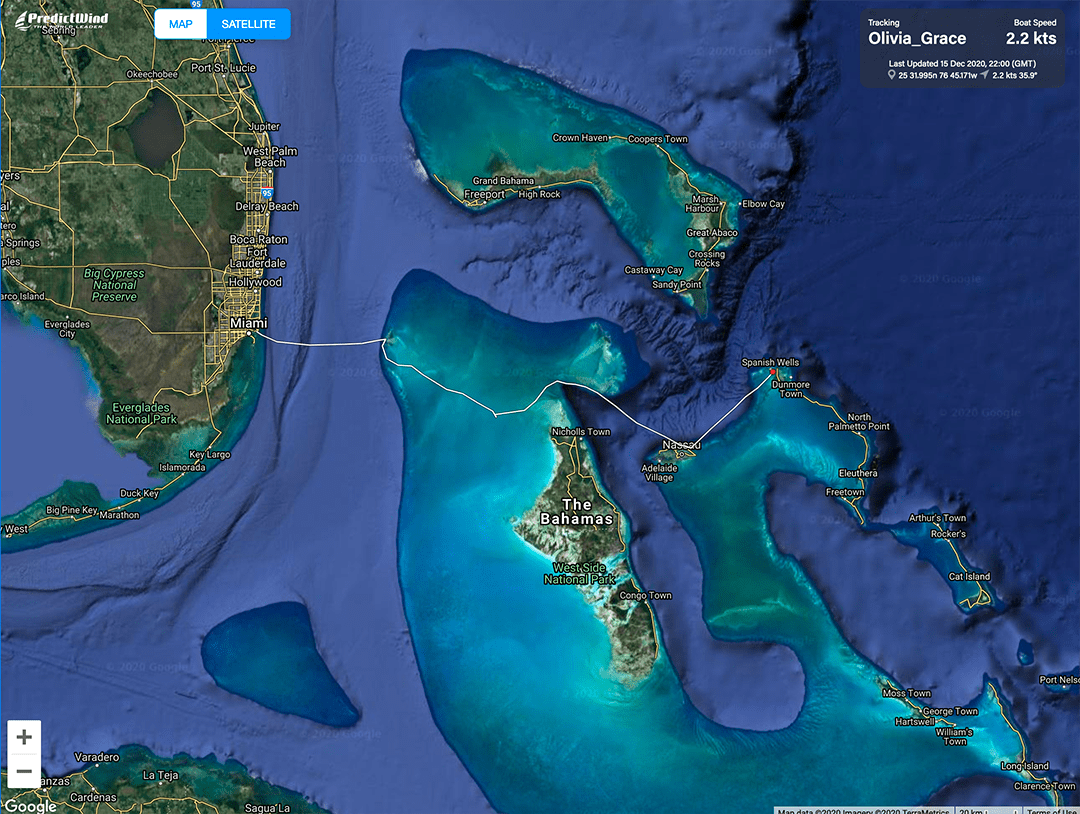
25.7617° N, 80.1918° W
Fair warning: this is a long one.
I left Chicago for Miami Beach on December 2 and spent the next 2 days cleaning and preparing the boat for departure. Mostly, however, I read weather reports in anticipation of crossing the Gulf Stream eastward toward Bimini, Bahamas’ closest port of entry.

Miami Beach Marina
Conventional wisdom insists that one never cross the Gulf Stream with any northern aspect to the wind. Reason being that wind out of the north, blowing against the southerly Gulf Stream, creates large, potentially breaking waves, making for uncomfortable conditions (at best). Western breeze at 15 knts? Go. Southern breeze up to 20 knts? Go. But, north, northwest, northeast breeze? Wait for better weather.
Above the equator, southern wind always precedes a low pressure system: wind circles the low in a counter-clockwise manner. With a small weather window between two low pressure systems, I decided on a Sunday, December 6 crossing and called the crew to help coordinate flights. Tom Dugard and Michael Flynn showed up the next day and we prepared for the crossing.
Most conveniently, Miami Beach Marina partnered with a concierge medical provider to administer Covid tests right at the marina. Dugard and Flynn arrived in Miami at approximately 1:00 p.m., and by 3:30 we were enduring the requisite nasal PCR test.
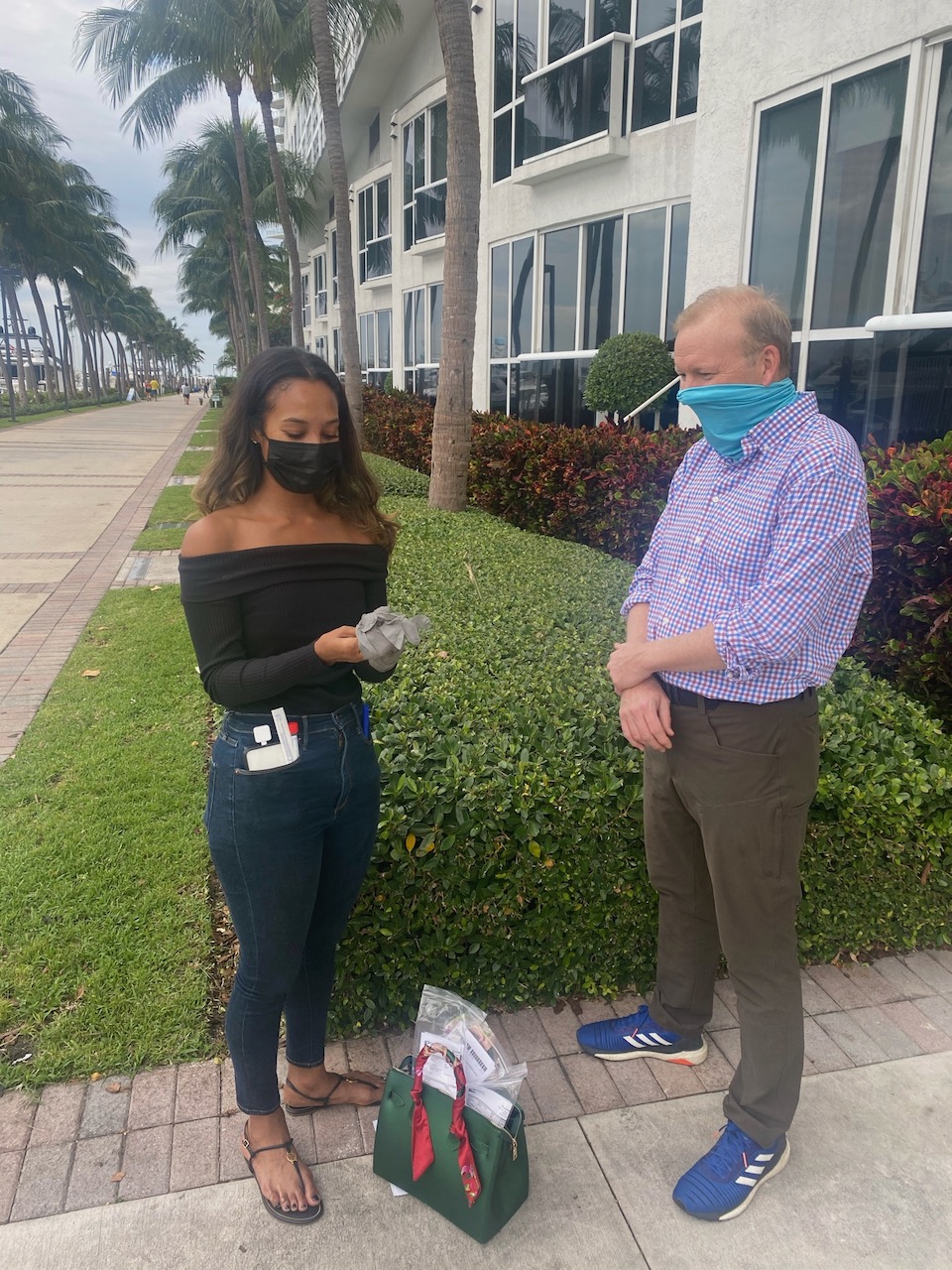
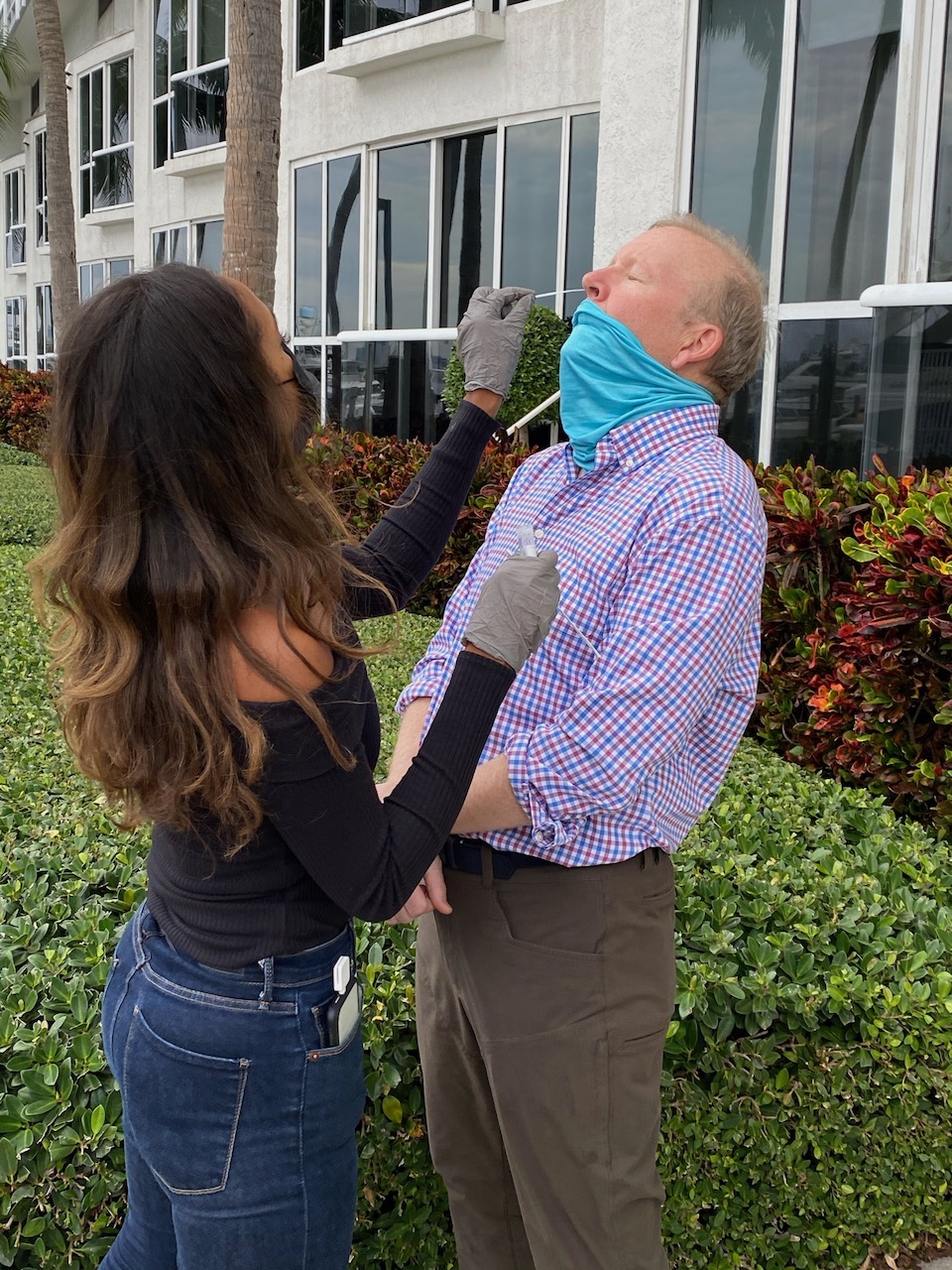
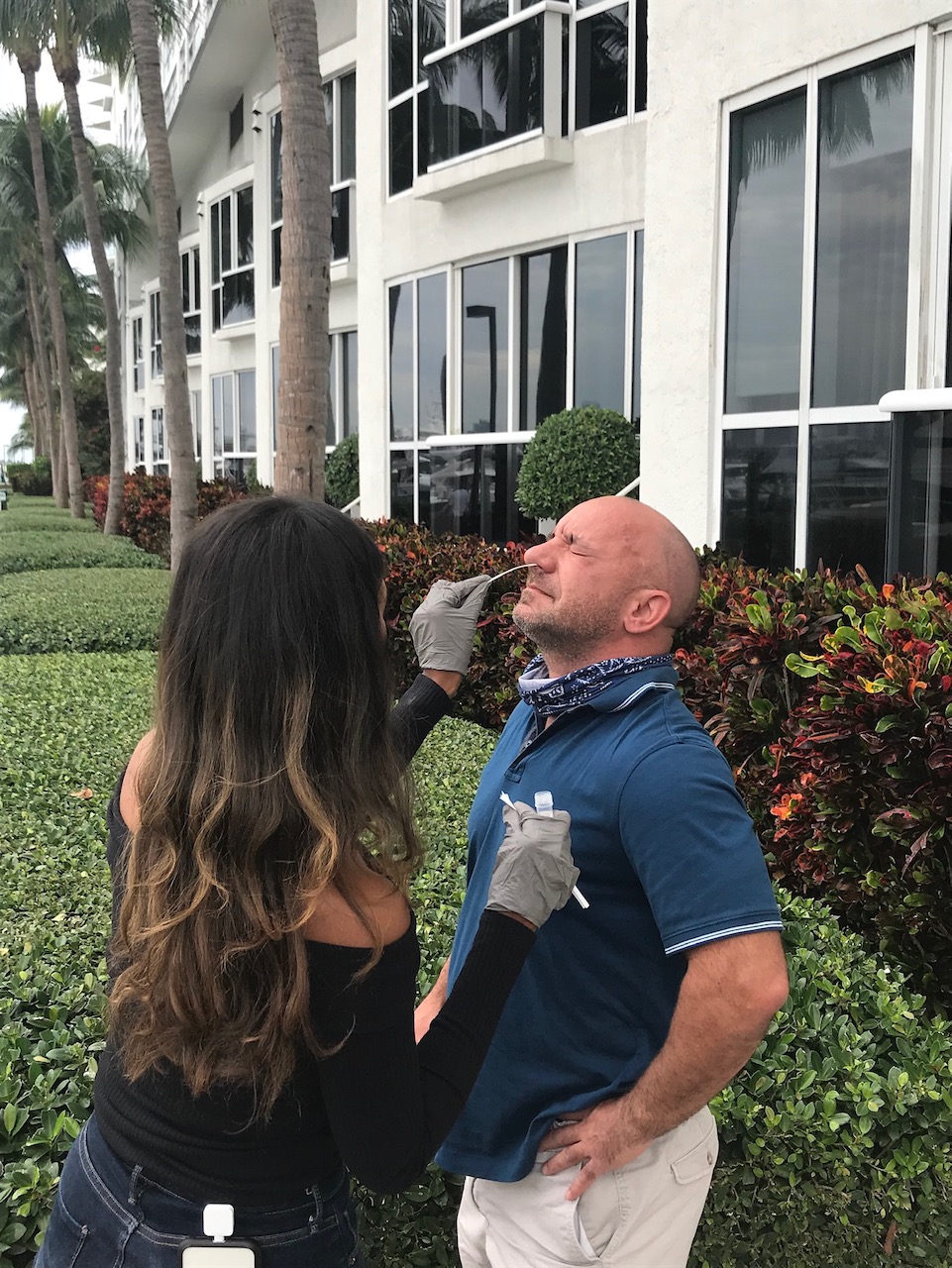
We received our negative results a few hours later and we uploaded proof to the Bahamian Health Ministry early the next day. About an hour later, our health visas were approved and the clock began to count down the 5 day window to make landfall in The Bahamas.
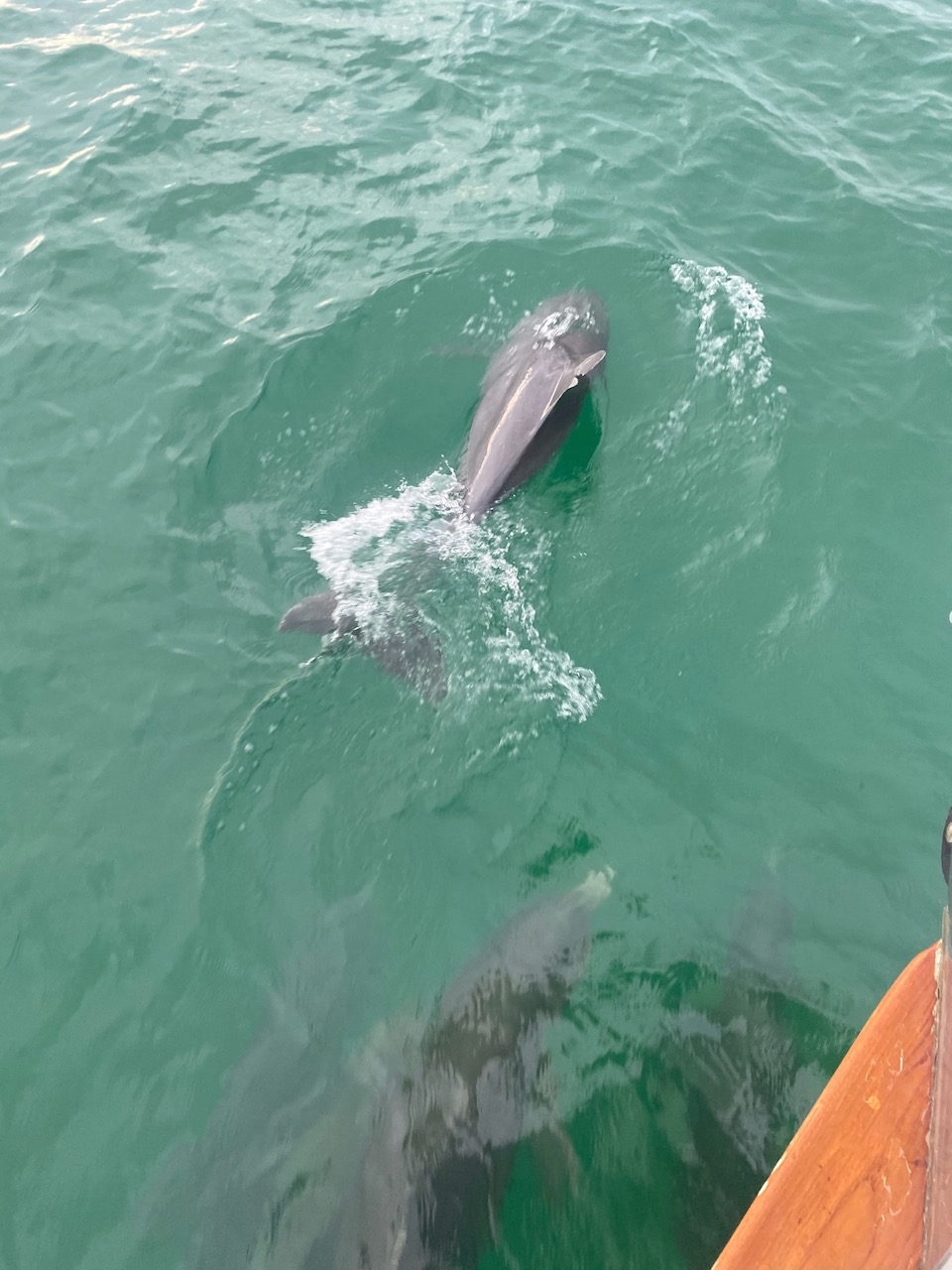
At 4:30 a.m., Sunday December 6 we departed Miami Beach Marina and pointed the bow towards 120°, compensating for Gulf Stream’s set and drift. Conditions were calm and flat with a 15 knt southerly breeze. Perfect. So perfect in fact, that a pod of dolphins began surfing our bow wake right off shore.

A beautiful day, until the diesel engine over heated. We quickly turned off the engine and radioed for Tow Boat US. About an hour later, with our dolphin friends long gone, the OG was being towed back down the Miami River, to RK Merrill-Stevens boat yard, where the trip began two months earlier.

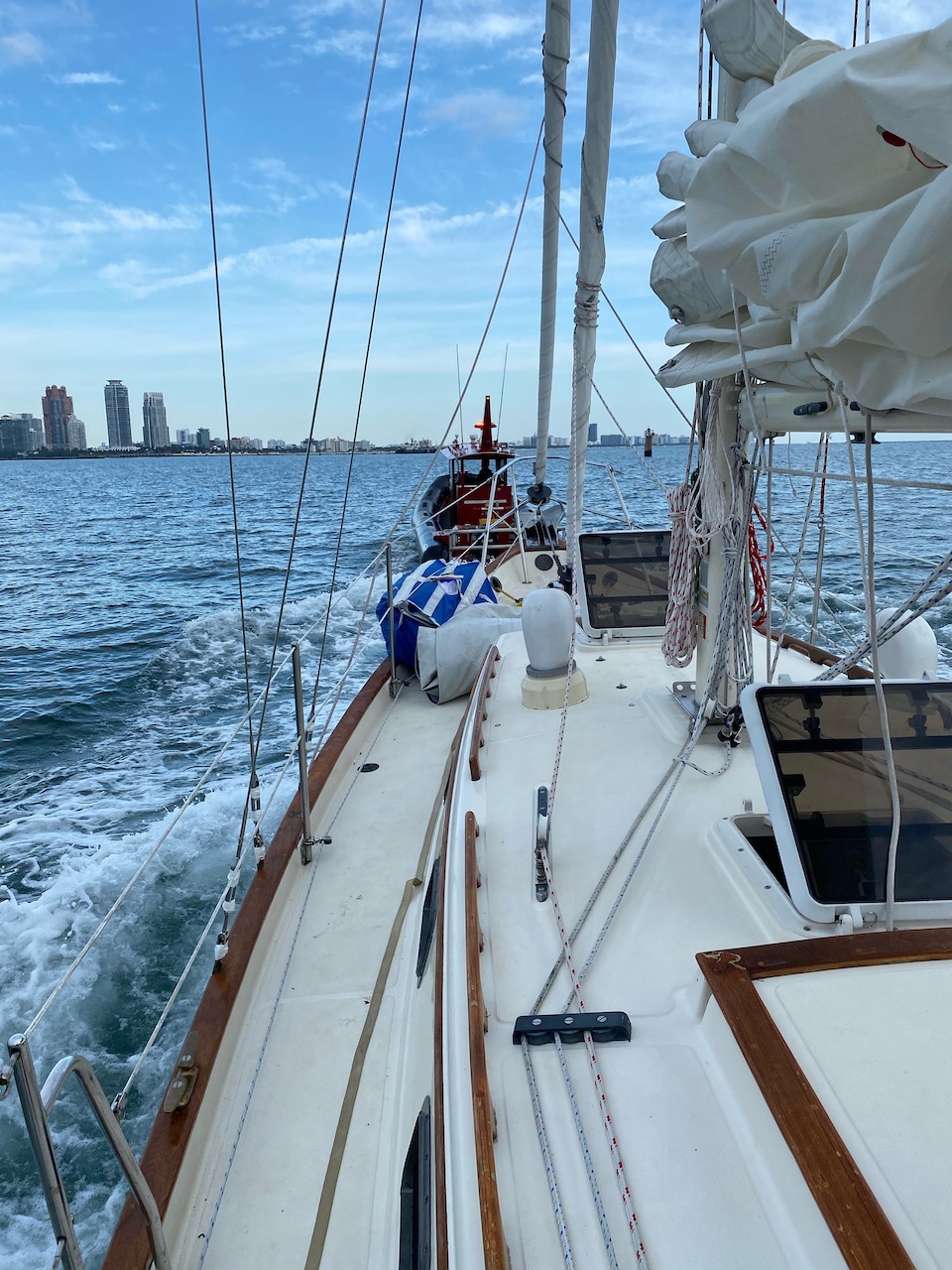
Having a local contact proved indispensable, as yard manager Jack Haney was waiting for us on arrival. Within an hour, and on a Sunday no less, Jack had the problem diagnosed and fixed, with the installation of a new engine thermostat. Thanks Jack! But, with the second low pressure on the immediate horizon, the weather window had shut and there was nothing but strong northerlies in the forecast.
Trying to make the best of a bad situation, we rented a car and drove to Key West. For two days, we (I) nursed our (my) wounds, drank rum, ate key lime pie and toured the island. And, we played several rounds of bingo at The Green Parrot.
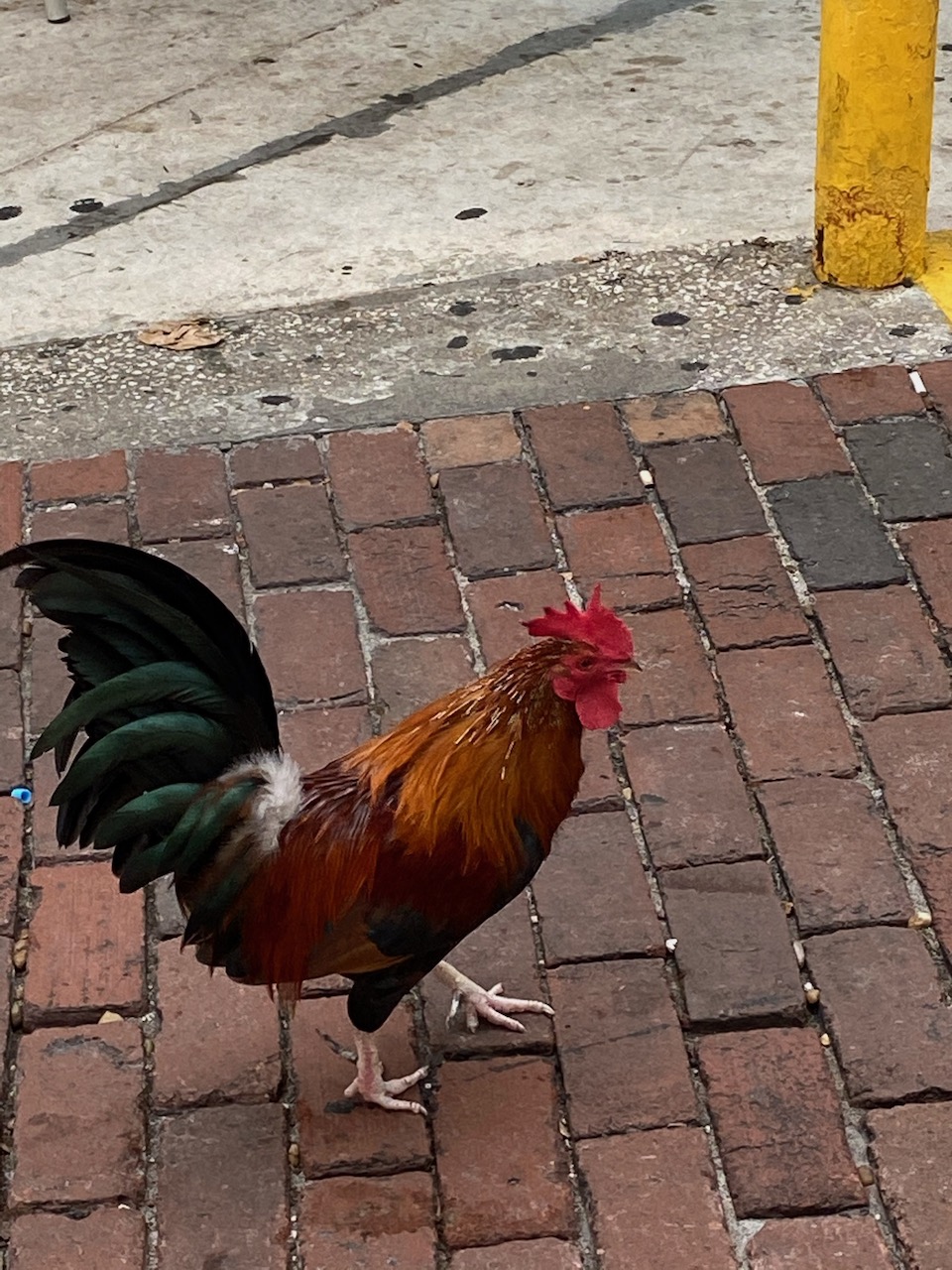
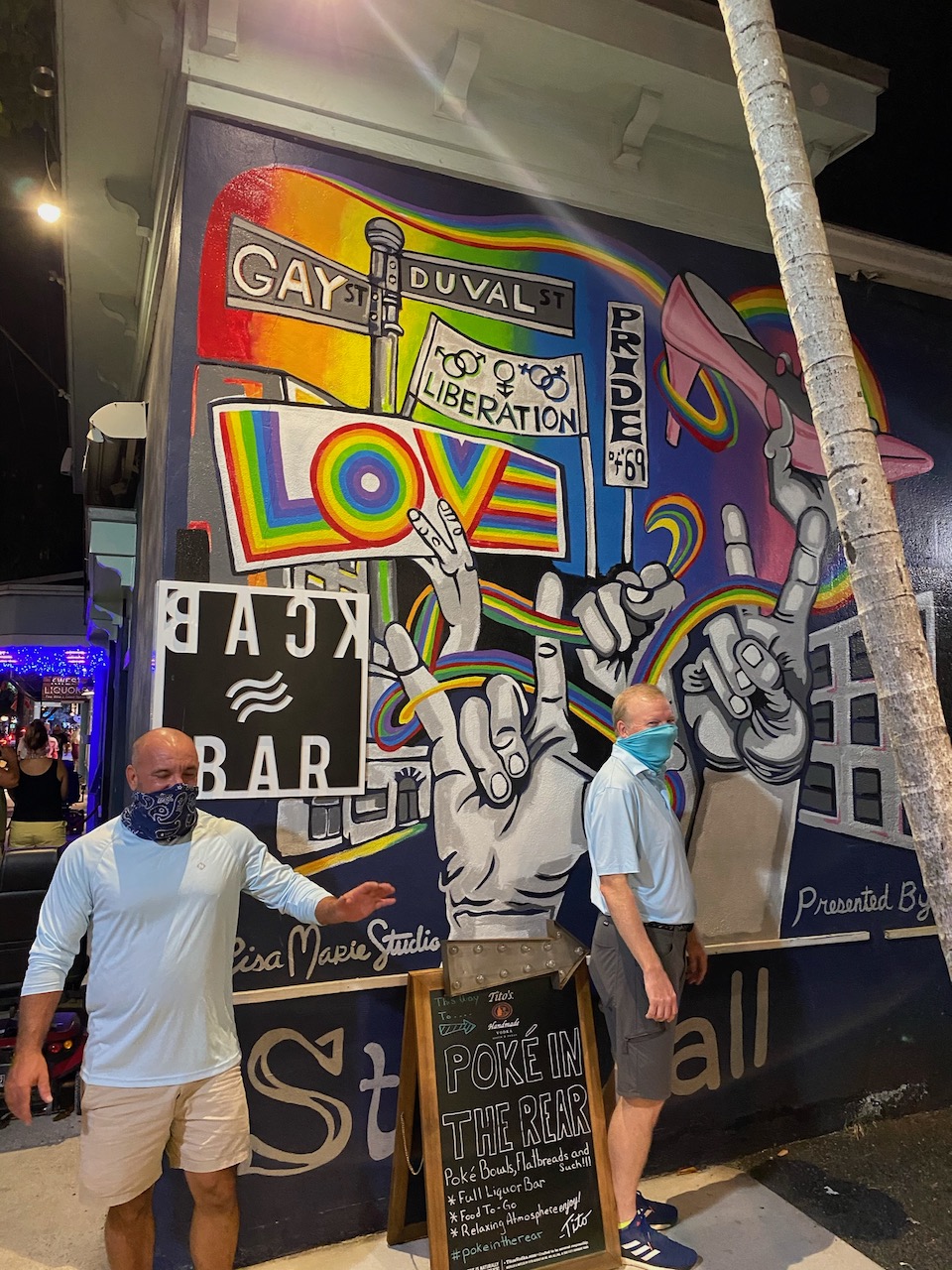

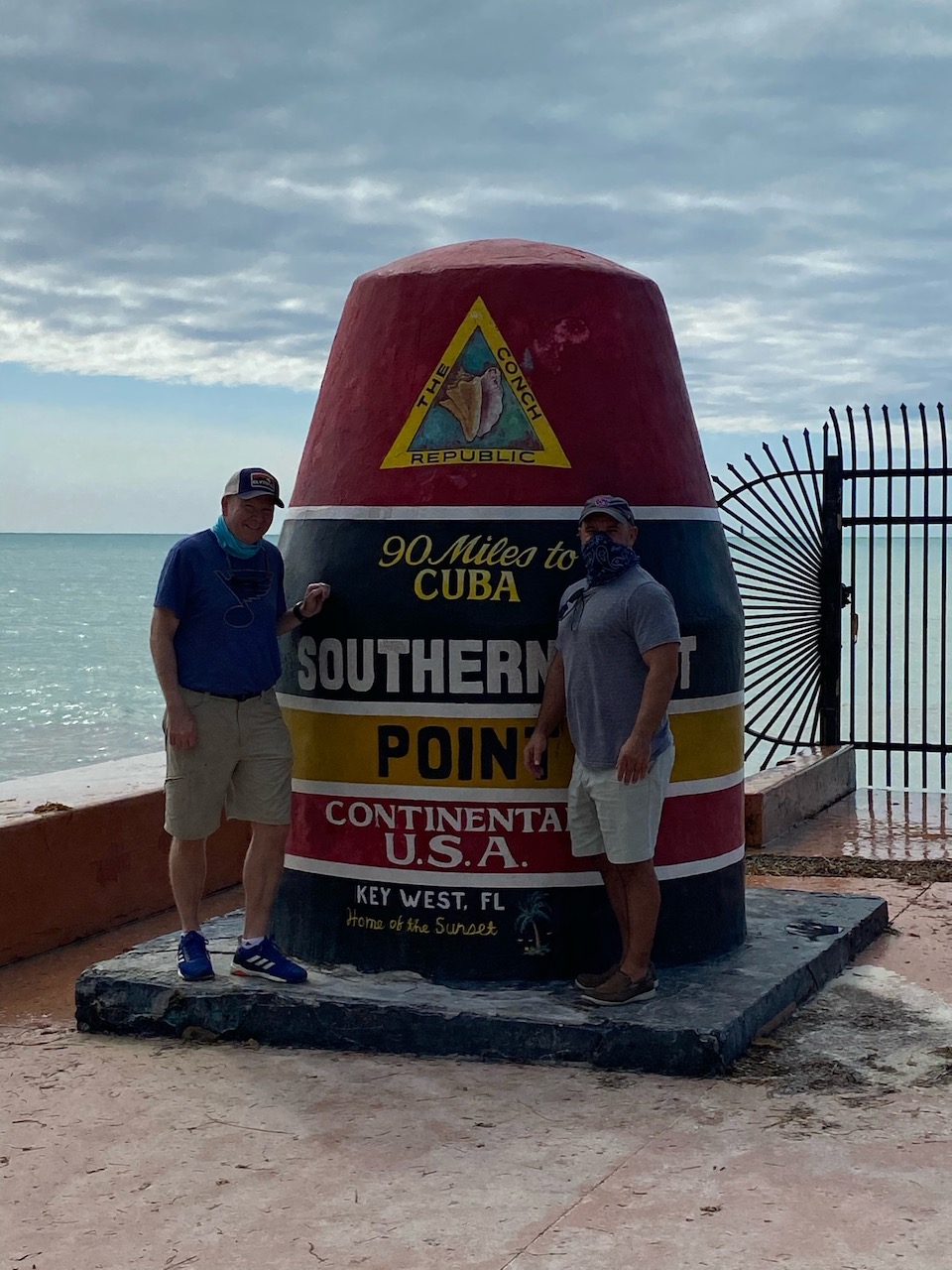
On Tuesday morning, with the 5 day period for our health visas drawing to a close, we made our way back to Miami. By noon, we were back on the river with the engine running smoothly as we powered our way back to Miami Beach Marina.
With extended northerlies in the forecast, our hopes for a smooth and comfortable crossing were dashed. Tuesday evening, before sunset, I walked to the waterfront with binoculars in hand, to observe what looked like large elephants marching on the horizon. Not a good sign at all. So, we developed a contingency plan to sail to Key Largo for another round of covid tests, should we not be able to make Bimini.
At day break on Wednesday, December 9, I again walked to the waterfront with my binoculars. It looked rough, but not that rough. And the wind had clocked around to the northwest throughout the night, rather than straight out of the north. I thought “lets give it a try; if it’s too much, we can sail south for Key Largo.”
At approximately 7 a.m., Wednesday morning we again motored out of Miami Beach and pointed the bow towards 120°. In a strong 15 knt. northwesterly, we sailed eastward towards Bimini. The strong breeze kicked up 8ft. waves in the Gulf Stream, but they weren’t breaking. So, while it was certainly a challenging and uncomfortable crossing, the strong wind and waves pushed us hard, right in the direction we intended to sail, averaging 6-7 knts. with a maximum VMG (velocity made good). We crossed from Miami Beach to Bimini, Bahamas, in under 9 hours and were tied up enjoying an early sun-downer by 4:30 p.m., tired, having completed the first leg of the delivery.
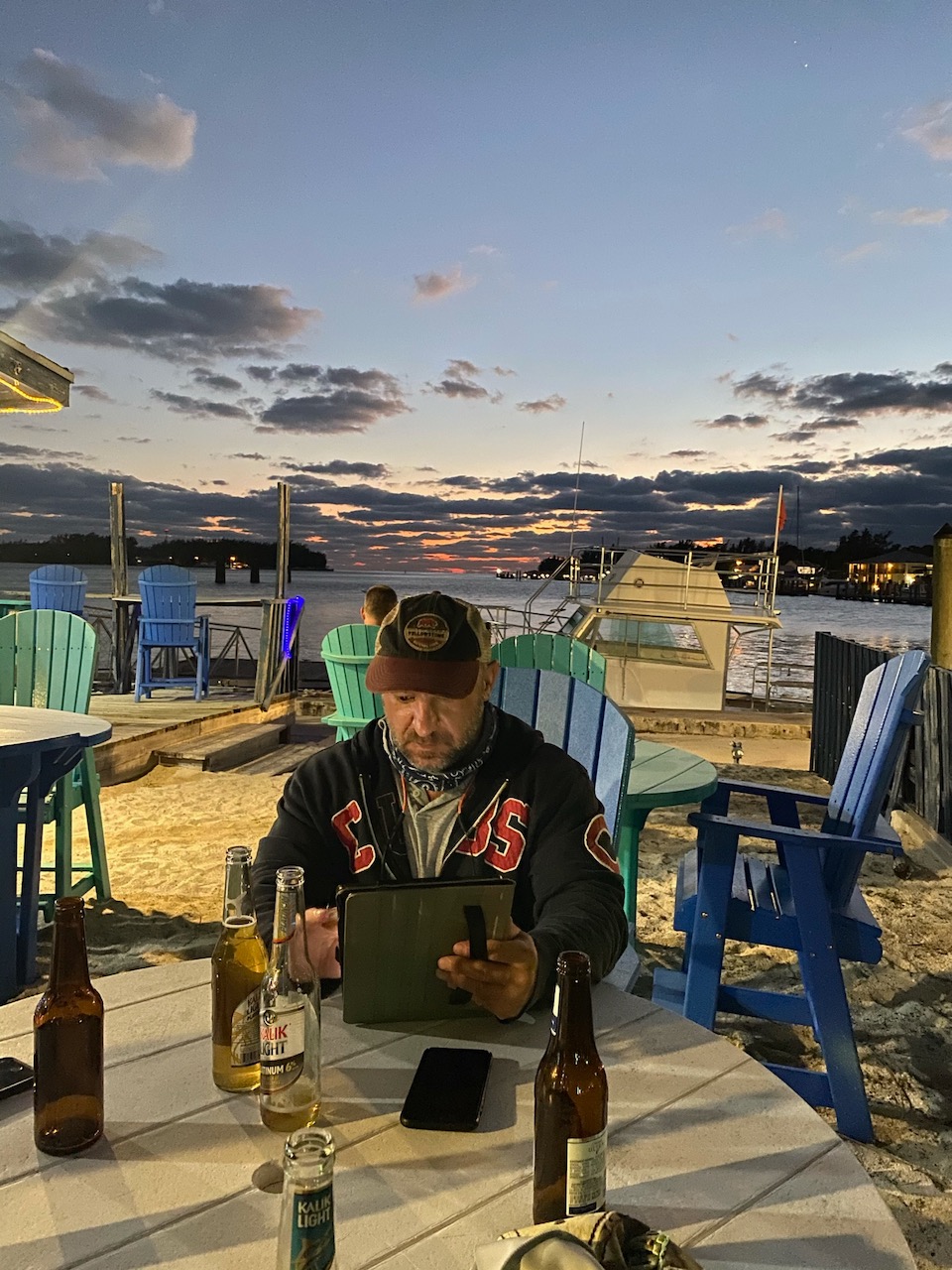
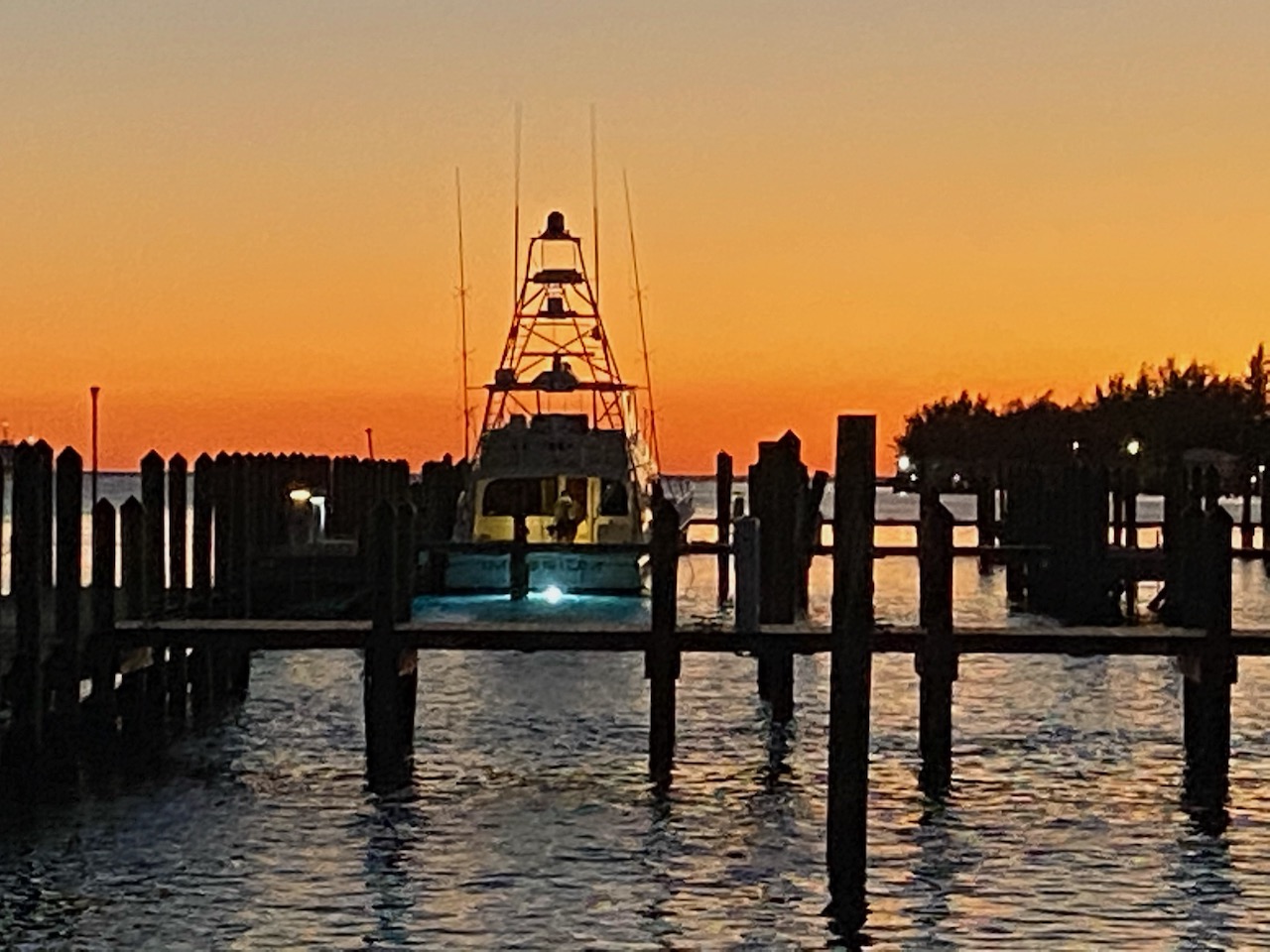
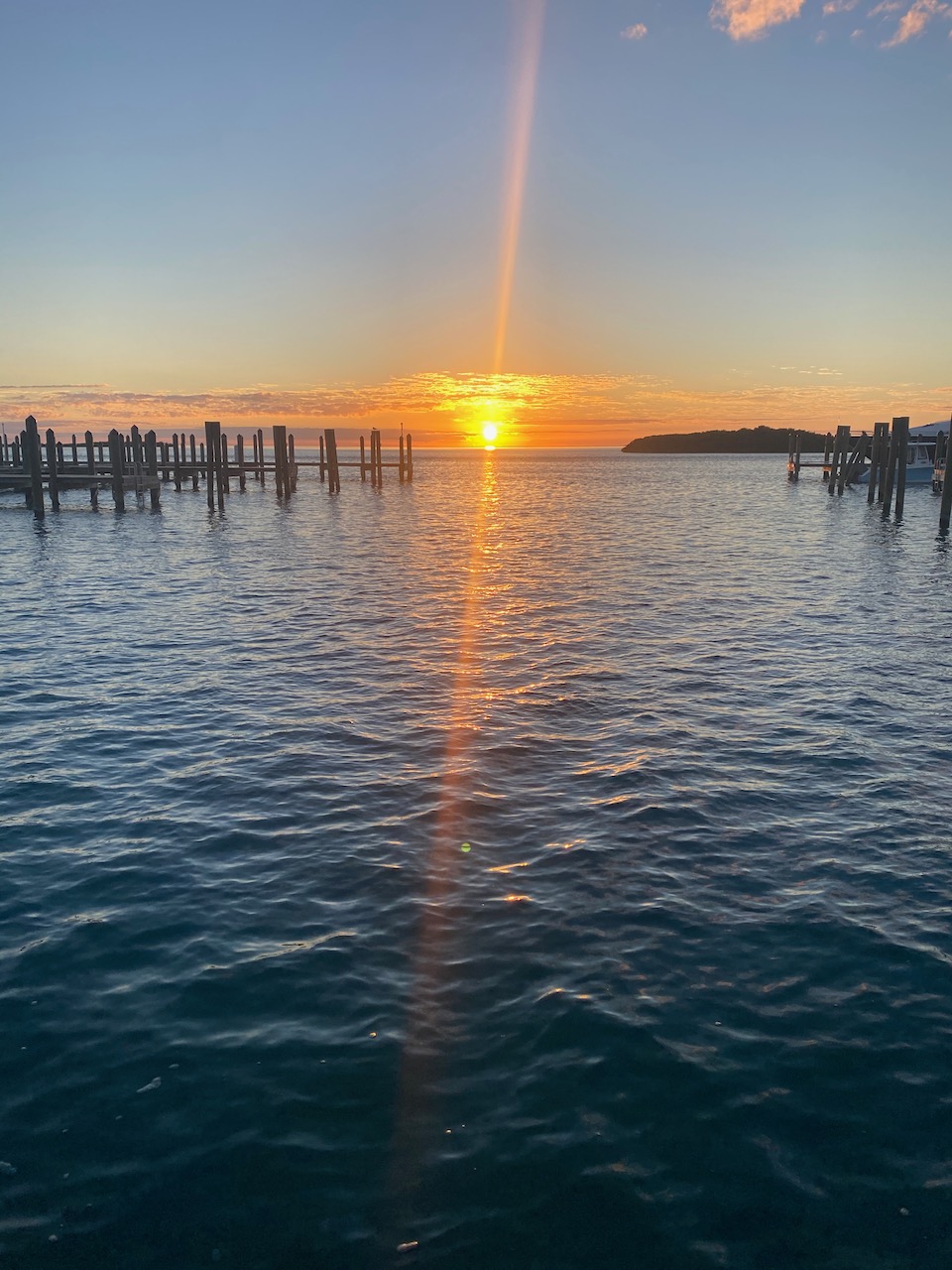
Clearing customs and immigration took only a few minutes. The officer on duty would only accept American cash payment for the various permits and licenses we were required to purchase. Pretty sure that went right into his pocket.
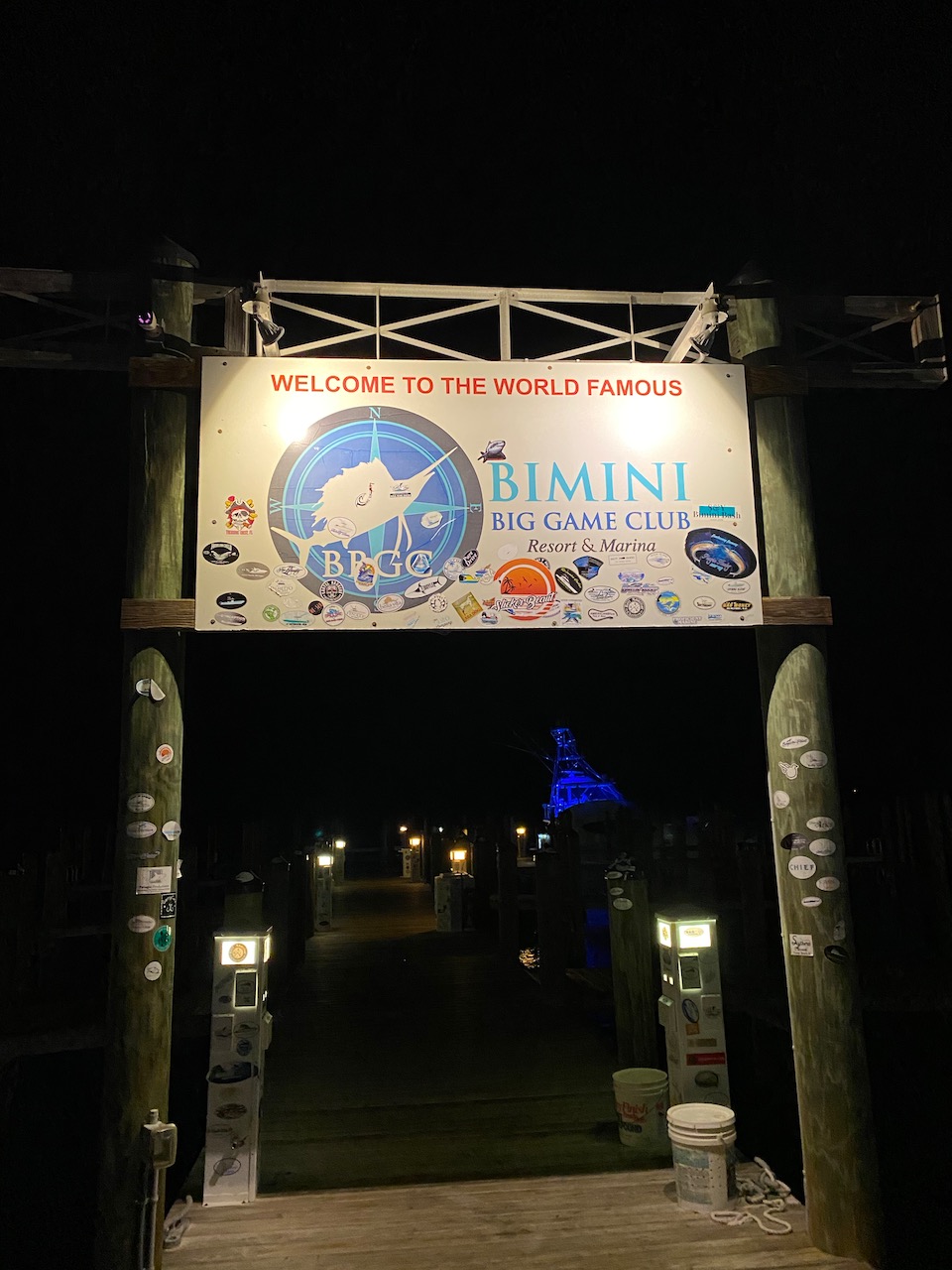
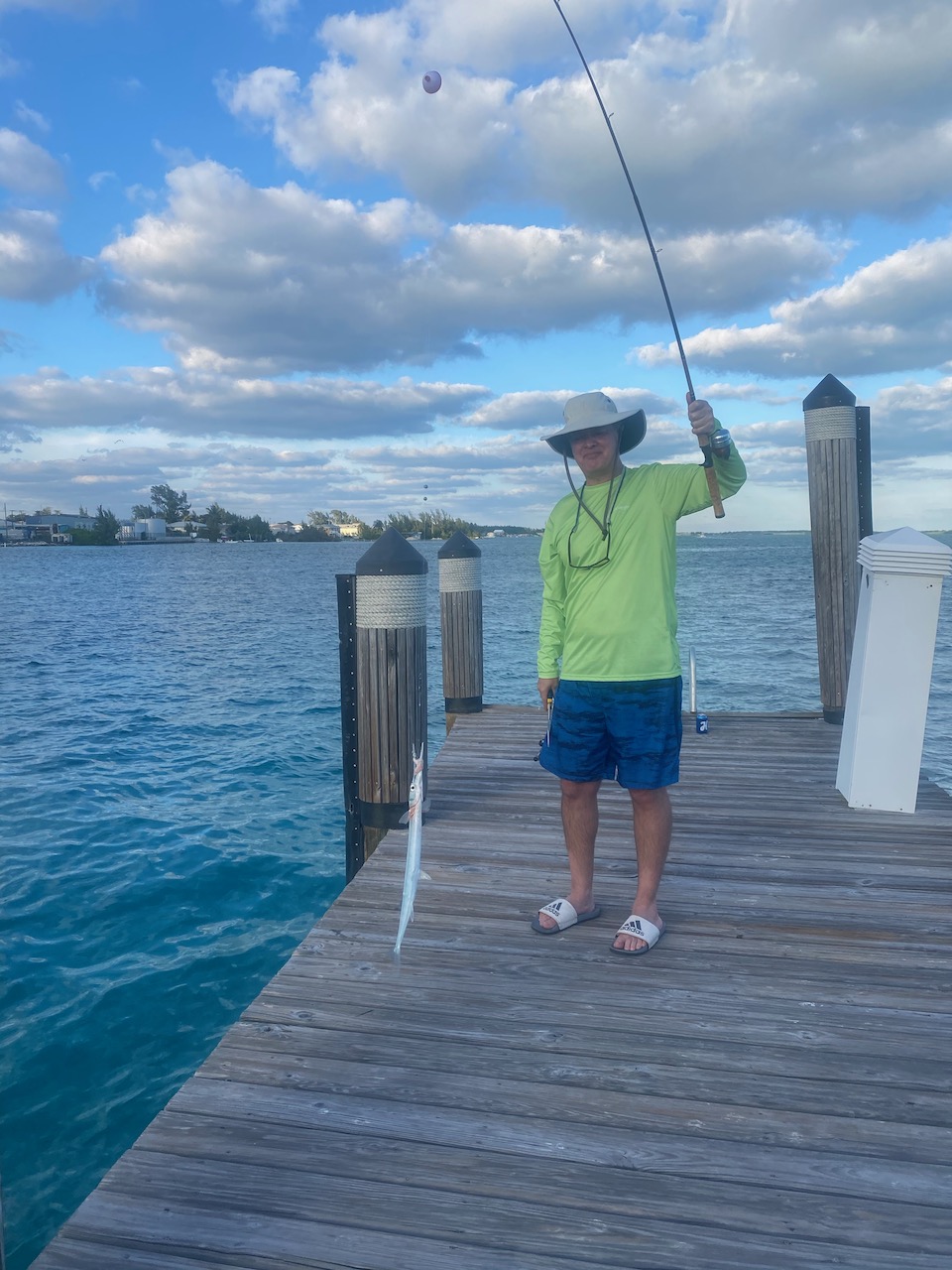
We regrouped and recharged at Big Game Marina in Bimini for 2 nights before pushing further east. We made some modest repairs to the boat, ate plenty of conch, and failed at fishing. Bimini is largely undeveloped and poor. Whatever development that had once occurred on these islands had been destroyed by hurricane Dorian in 2019. Much of the island group is still struggling to clear the debris.
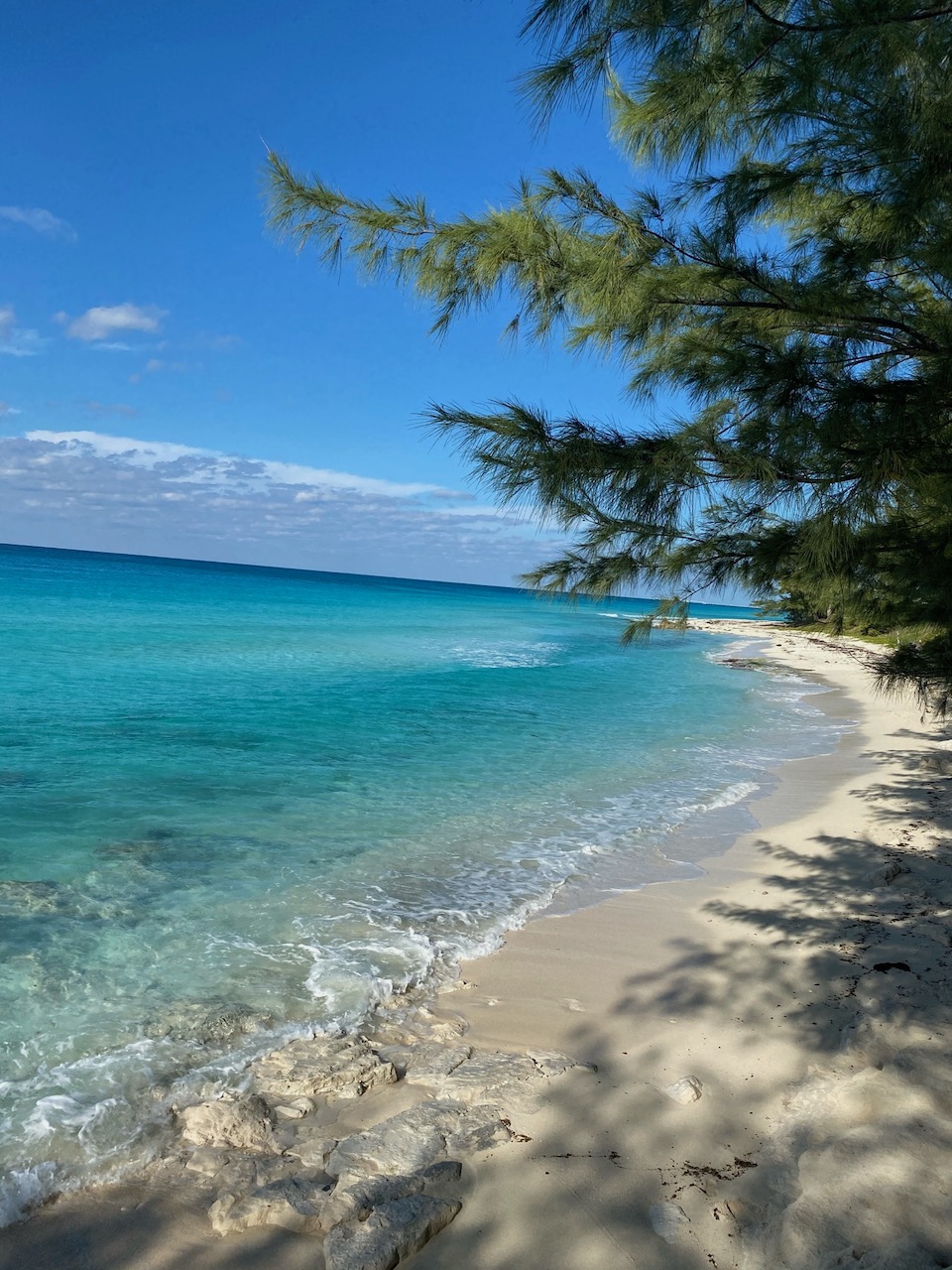


On Friday, December 11, we began motor-sailing east across the Great Bahama Bank. It did not disappoint: the water was clear as gin and never exceeded 11 ft. in depth for 60 miles. With a steady 10-12 knt. northwesterly breeze, conditions were benign and conducive to at least a few hours sail without an engine assist.
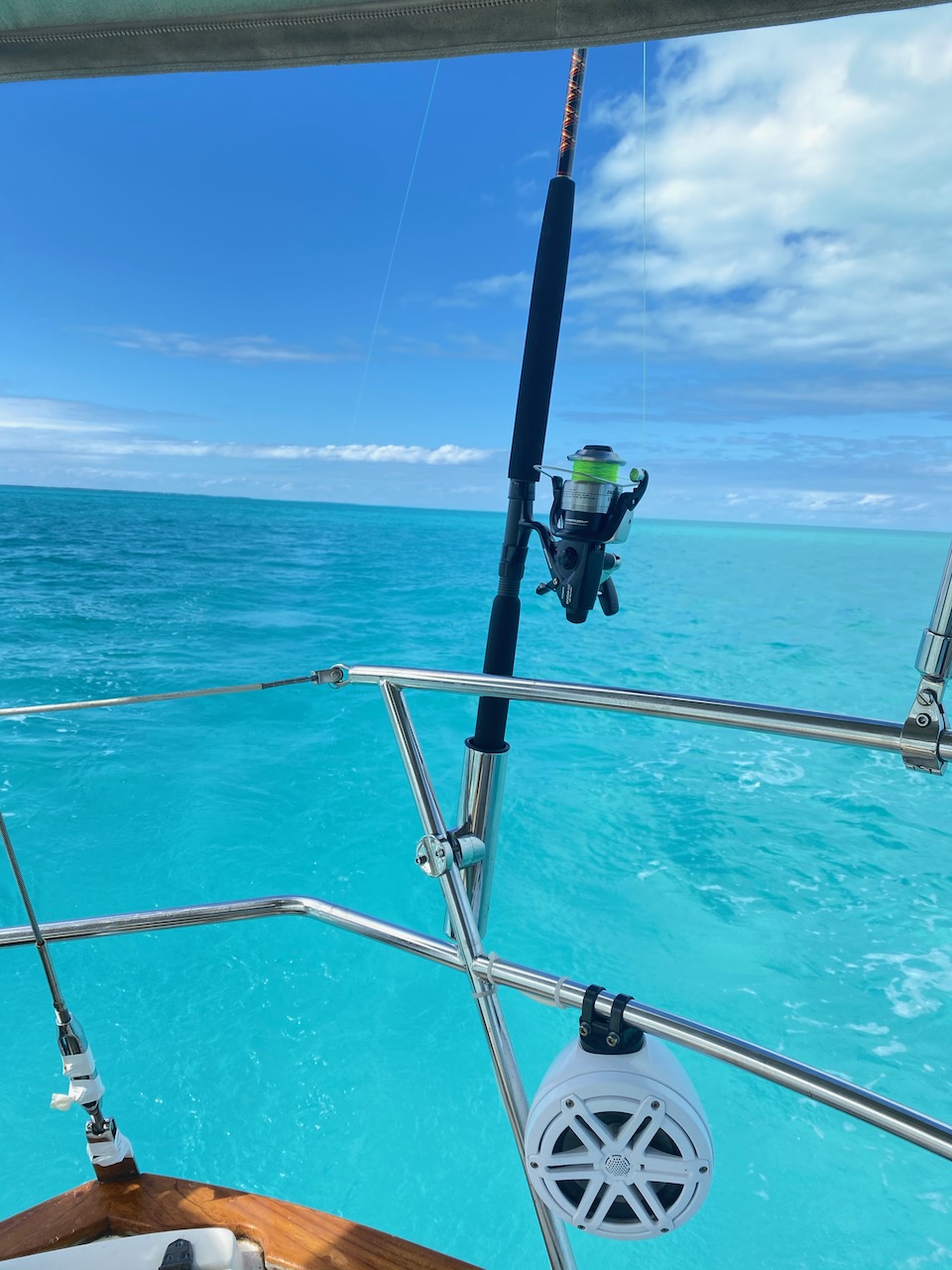
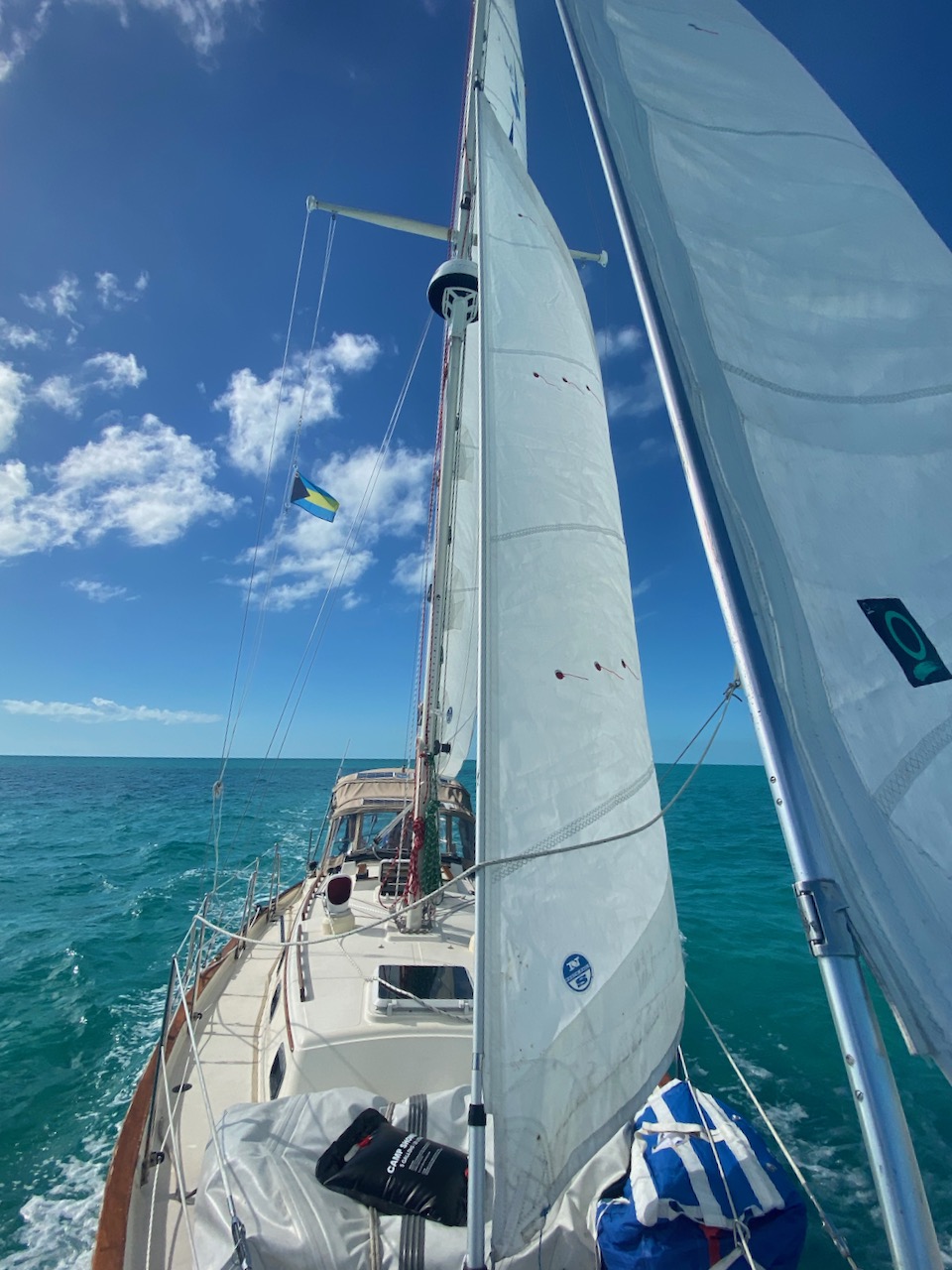

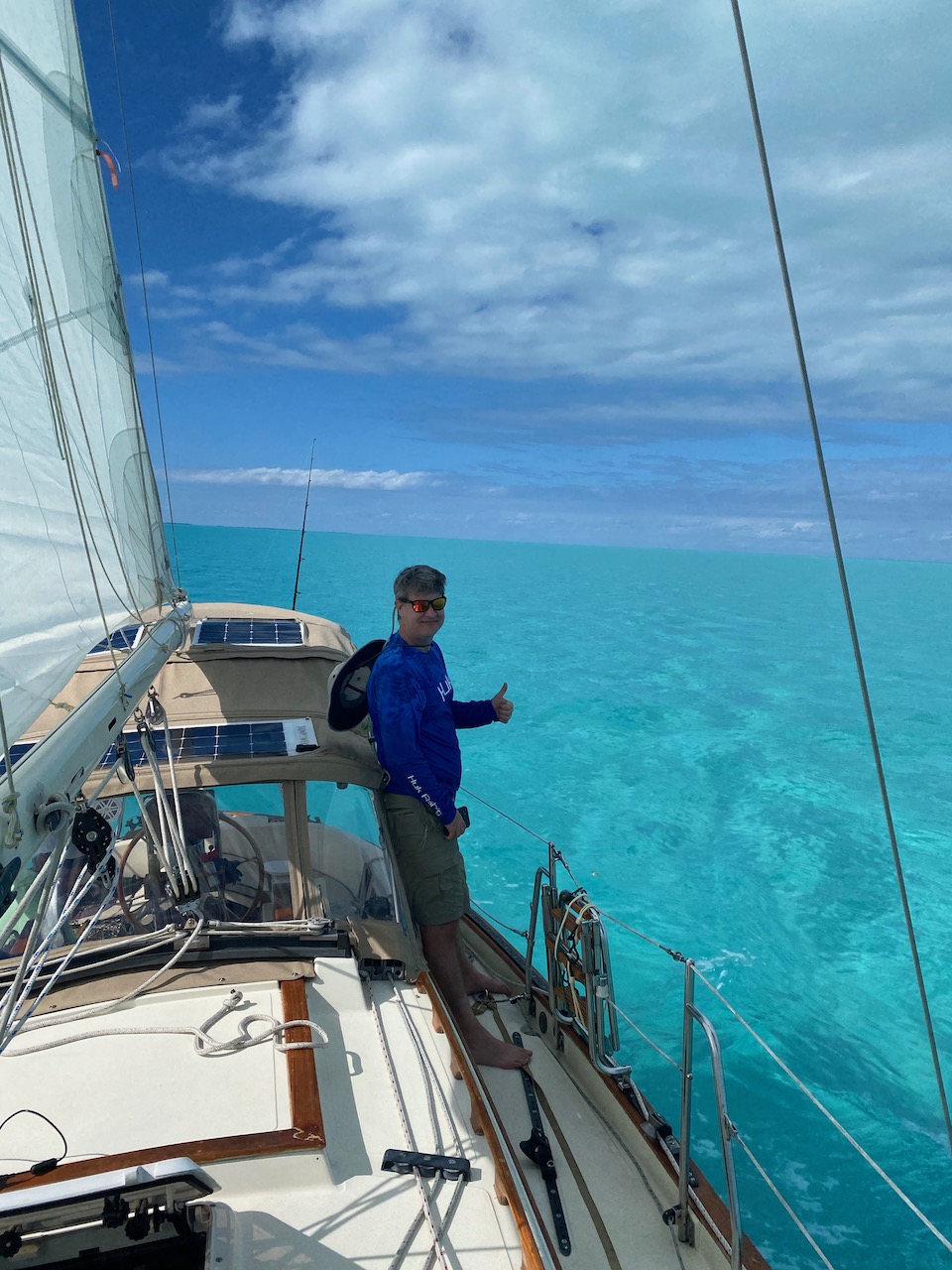
Our plan was to anchor for the night mid-bank and continue towards the Berry Islands in the morning. It wasn’t a bad plan and many sailors transiting the bank do exactly that. Though in practice, it was pretty uncomfortable. We dropped the anchor at 7:30 p.m. I took 2 dramamine, the strong ones, and passed out in the cockpit by 8:00.
At 1:30 am the following day, while repositioning myself from the starboard side to the port, I accidentally stepped on Dugard’s PLB (which maybe shouldn’t have been sitting on the floor of the cockpit!), triggering a distress call to the US Coast Guard. A detailed recitation of what transpired will not be included here. Most importantly, all parties were safe, the US Coast Guard was called off, eventually, and everyone’s families rested assured of our safety within an hour of the event. There really should be some mechanism to recall a distress signal. Just say’in.
At 700 a.m. the next morning, we continued motor-sailing eastward across the Great Bahama Bank towards Chub Cay, at the southeastern edge of the Berry Islands. After powering through a strong counter swell for 11 hours, we finally made landfall at the Chub Cay Marina, just before nightfall on Saturday, December 12.
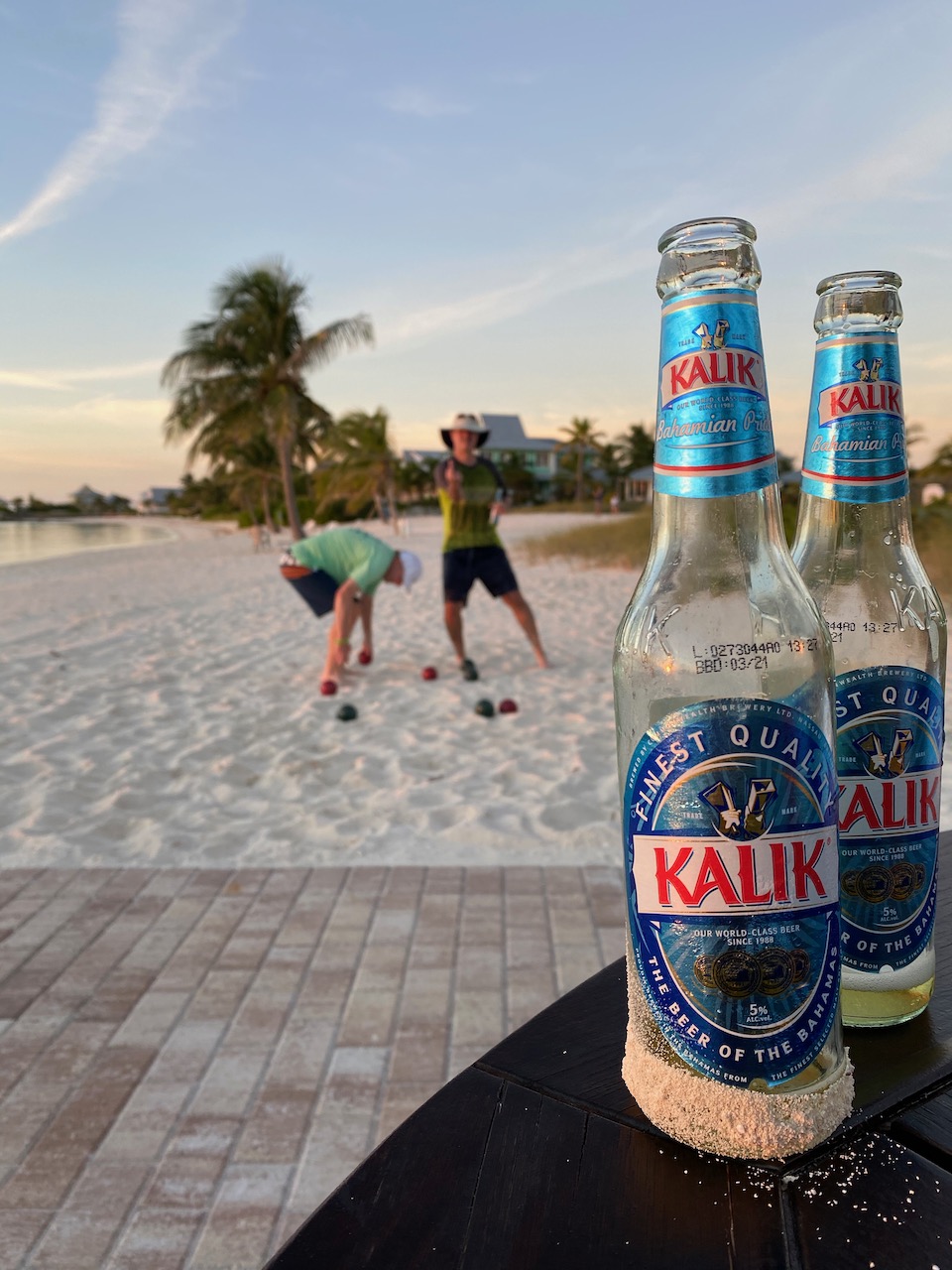
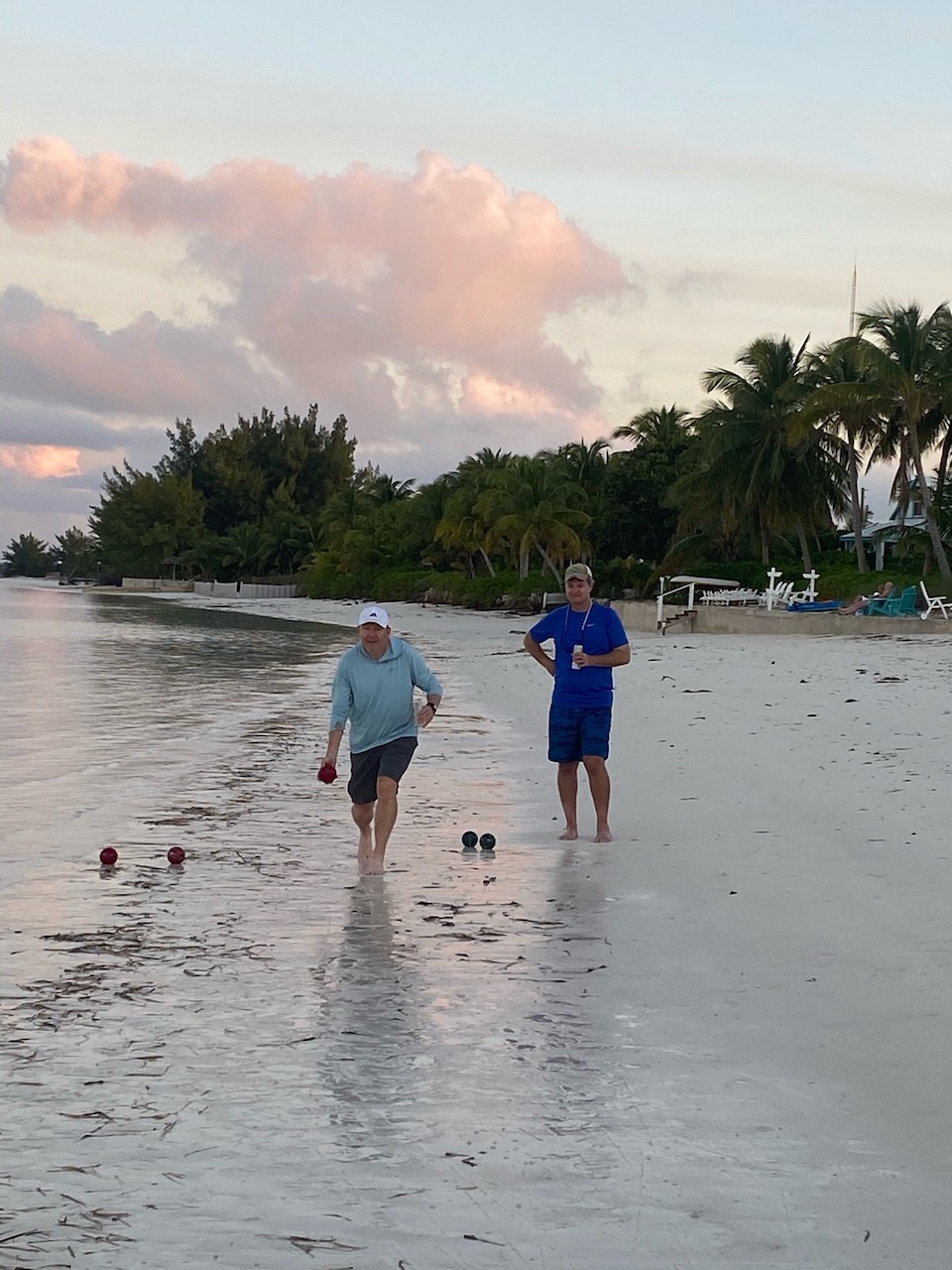
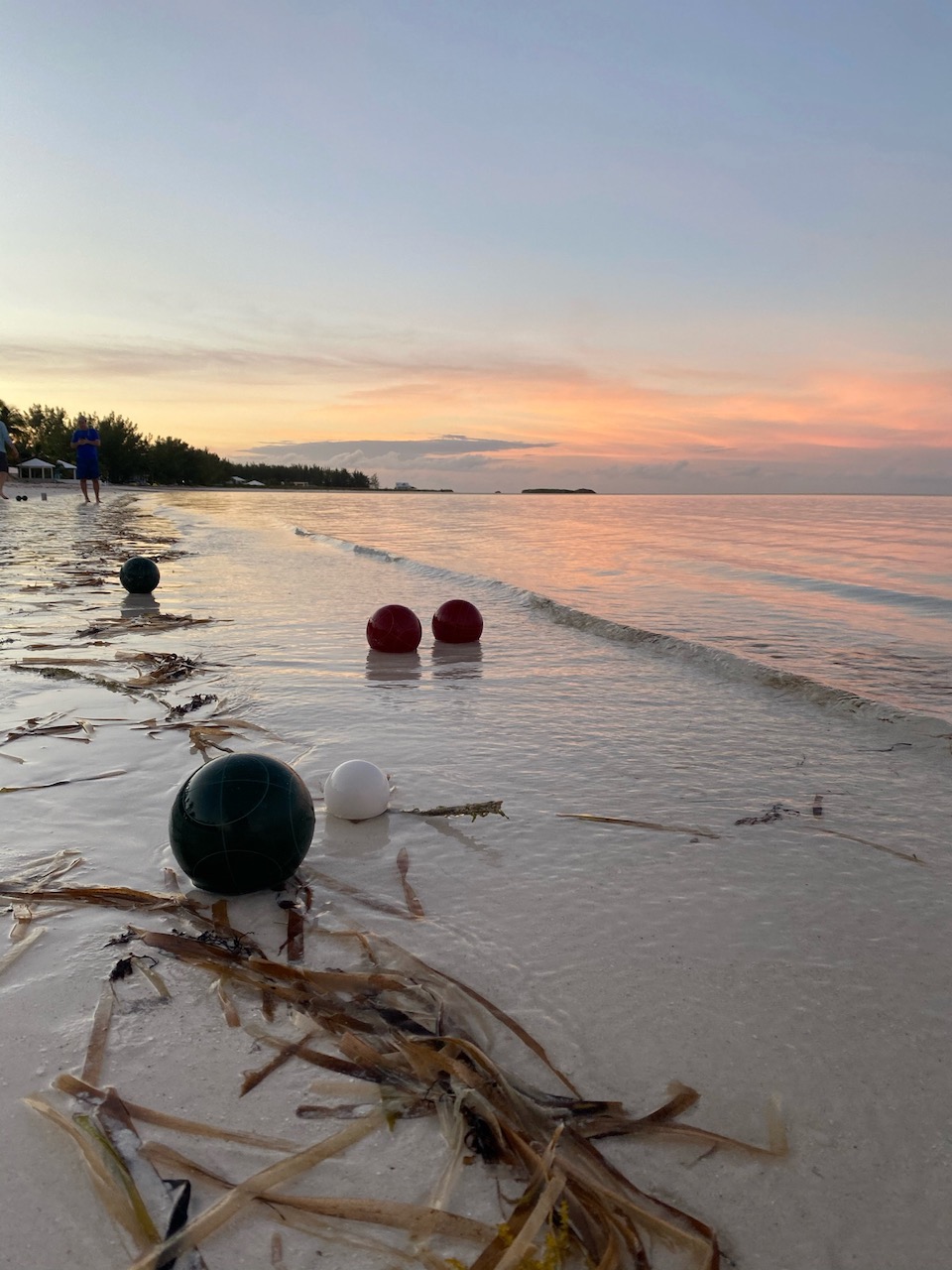
After two long days and one very long night crossing the massive Bahama Bank, we decided to recharge for two nights in Chub Cay. We ate plenty of conch and lobster, played bocce, and even met some other sailors out of Burnham Harbor, Chicago.
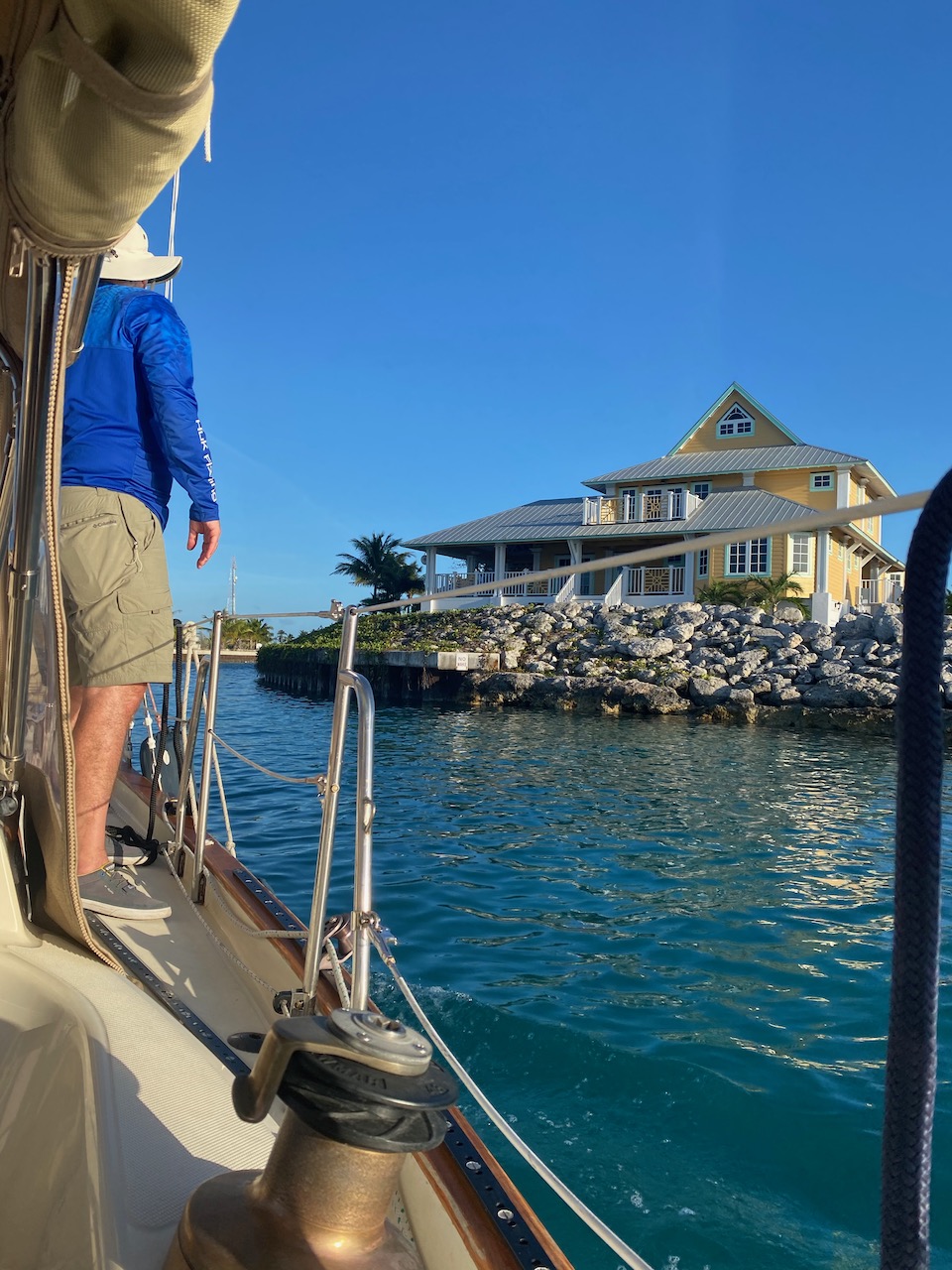
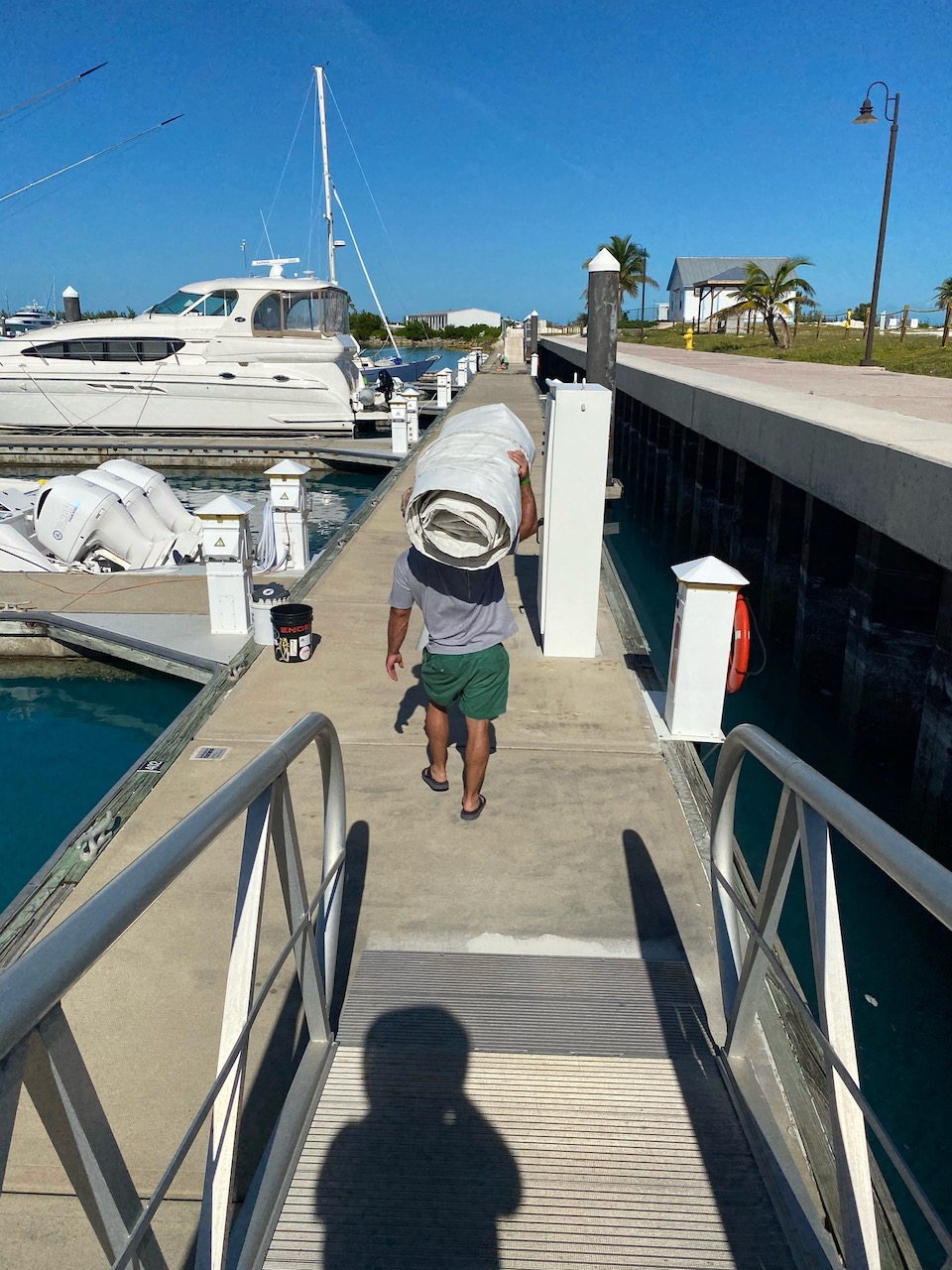
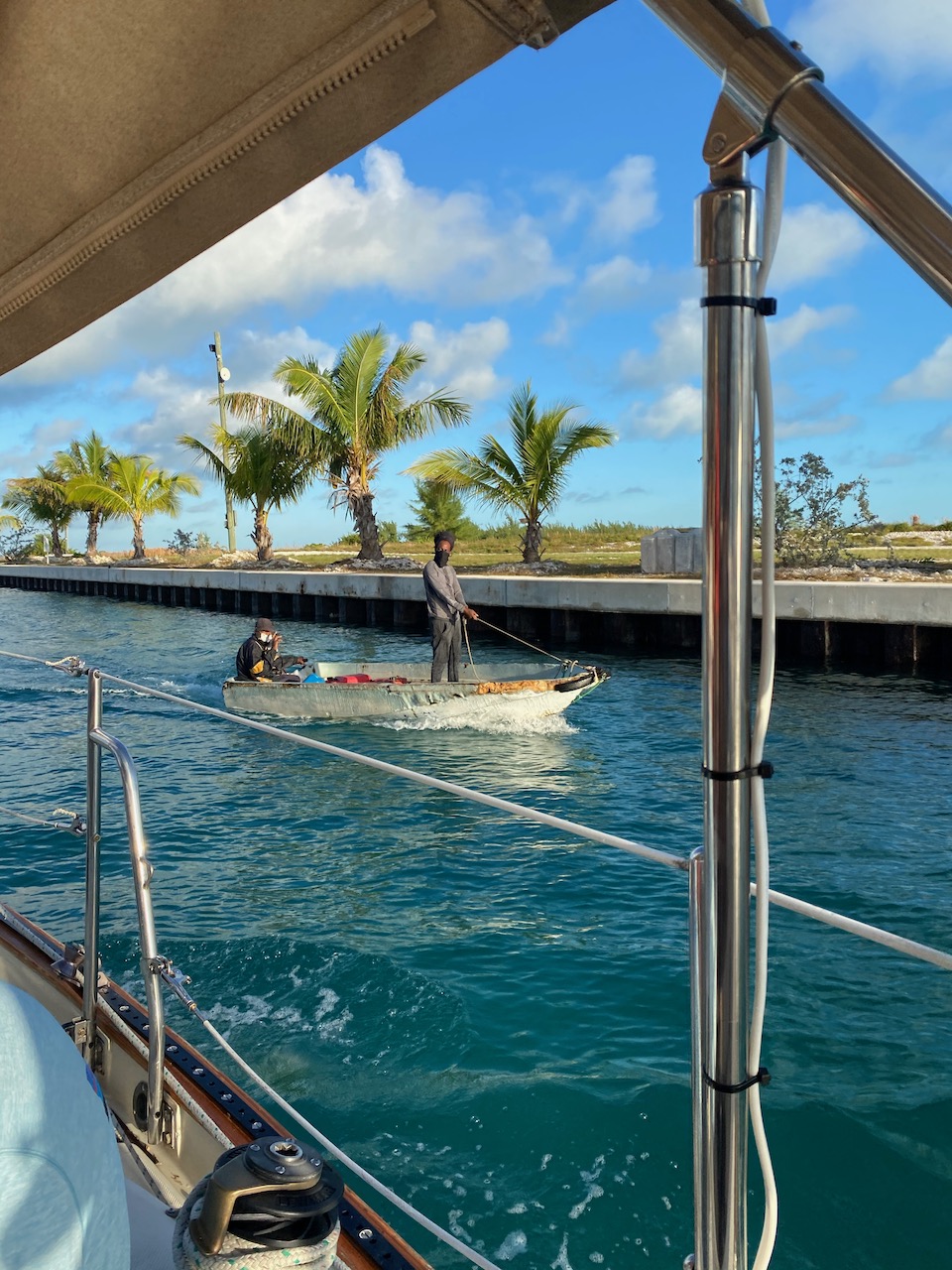

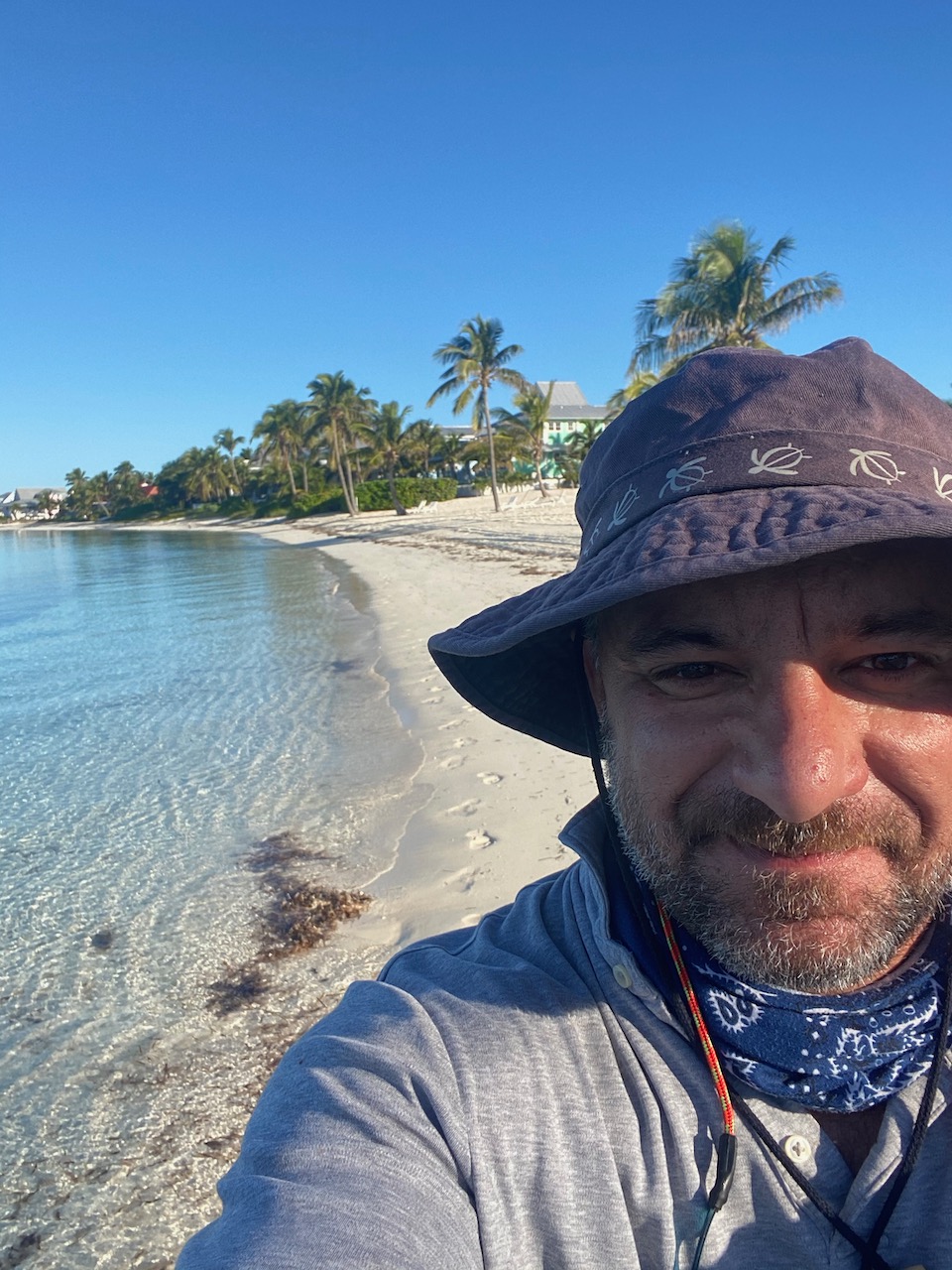
On Monday, December 14, we set sail for Nassau. It was an uneventful motor-sail 38 nautical miles southeast, during which we found time to once again to fail at fishing. In Nassau, we found a slip at Bay Street Marina, in the seedier part of the large commercial port town, opposite Paradise Island, which hosts Atlantis and other high-end resorts. It was fine: there was a marina bar with decent food and it was close to a ship store that sold a fair substitute for sail-repair tape.
We departed Nassau for Spanish Wells the following day, finding no reason to stick around Nassau. Because of the stationary high pressure system sitting over central Bahamas, we had absolutely no wind assist heading northeast through Fleming Channel. Nevertheless, flat seas created pleasant, though windless, conditions and we completed the passage in about 6 hours, after playing “tag” with a dolphin.
On the way, we dropped anchor at Meeks Patch, a small island 2 miles southwest of the entrance to Spanish Wells. Meeks Patch is known for purportedly friendly swimming pigs. We dropped the anchor in about 8 feet of crystal clear water, lowered the dinghy and motored into shore. No pigs were found; but, we enjoyed a beer and some star fish.
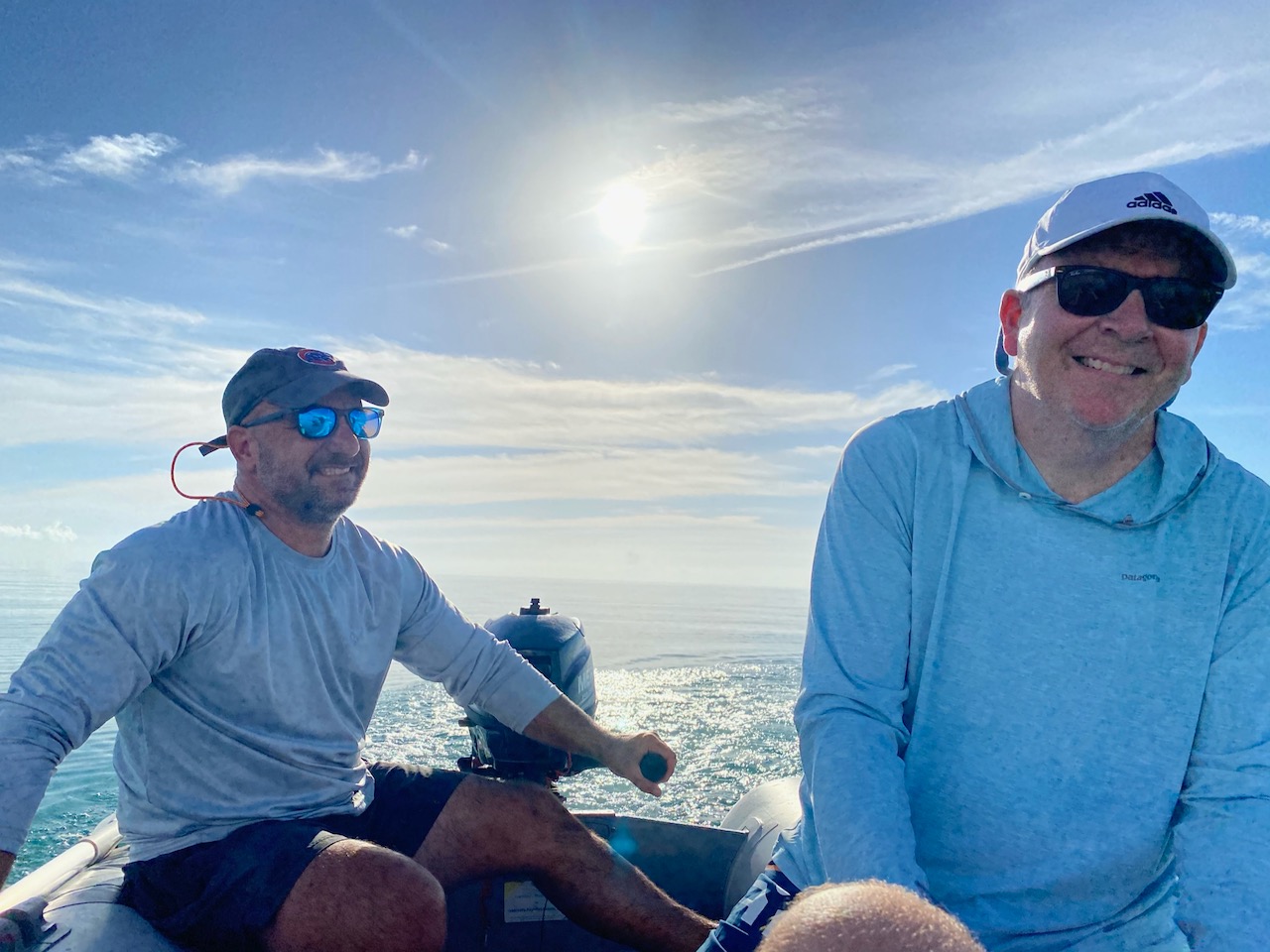

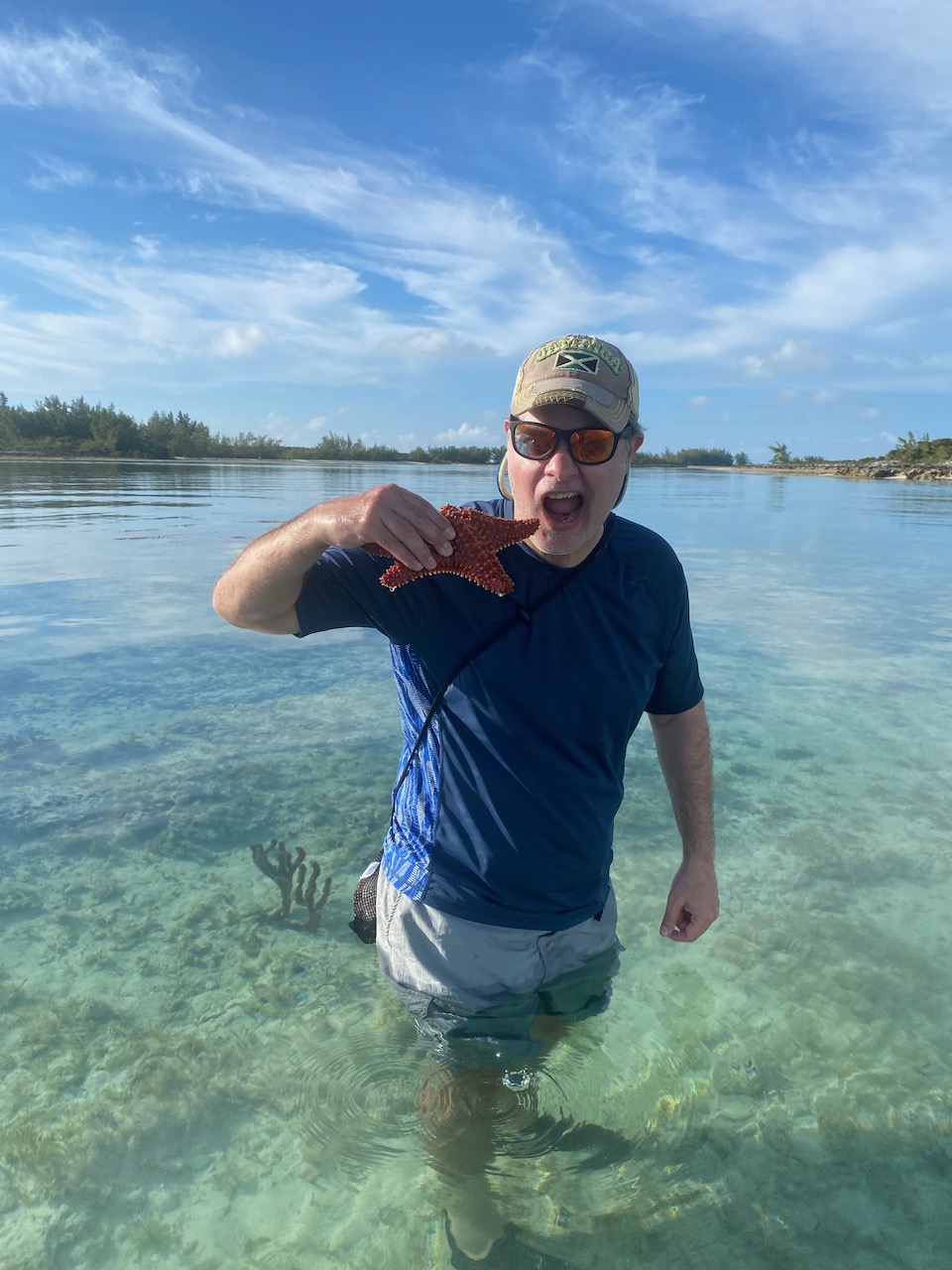
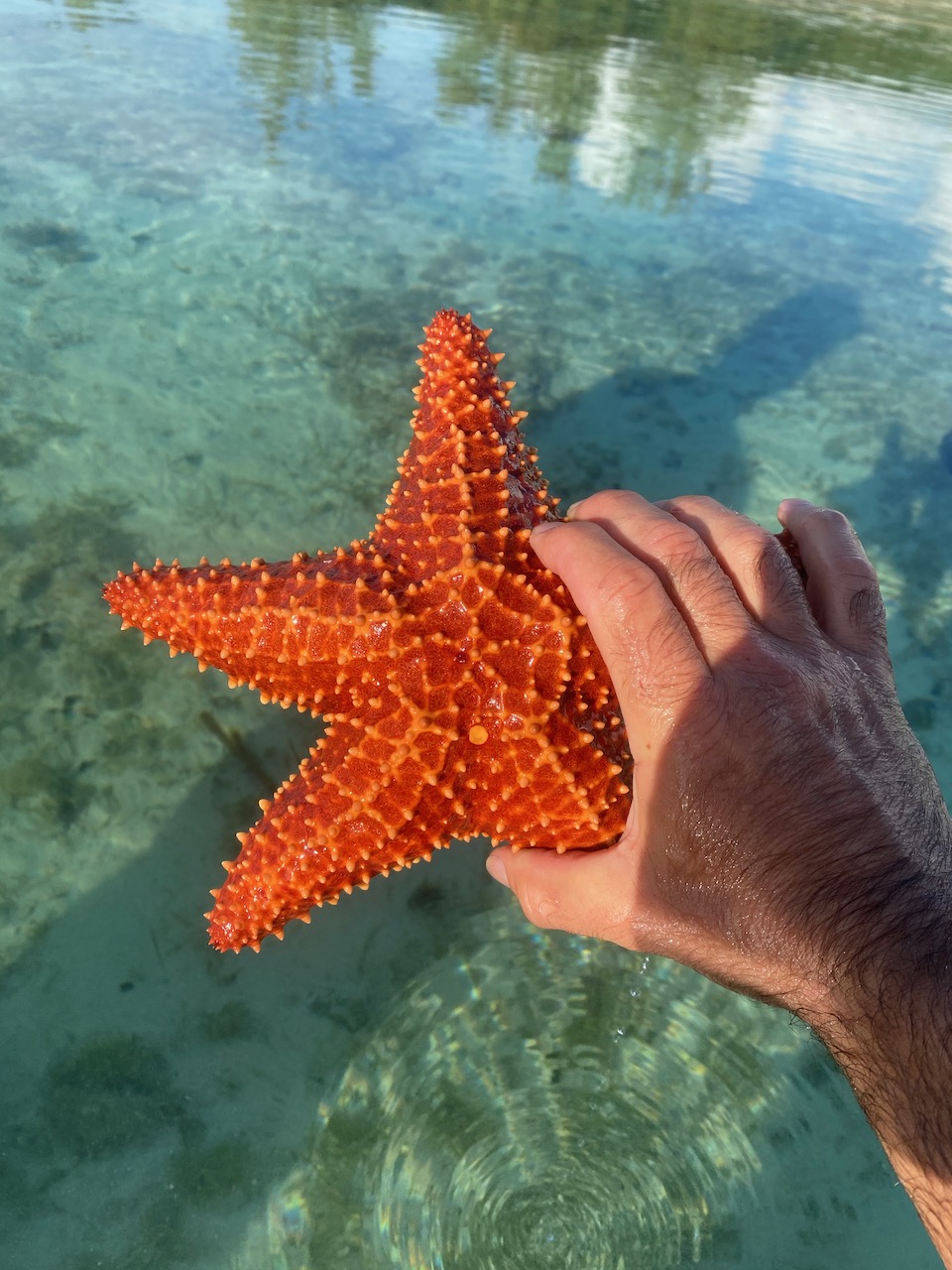
With the sun rapidly dropping, we made way for the Spanish Wells Inlet. Our Navionics and RayMarine charts indicated 8-9 feet of depth in the run-up to the Inlet. Our depth sounder, however, told a different story: 3’ then 2’, 1’ and finally 0.0’. We ran aground, thankfully in soft sand, right outside of the inlet. After freeing the boat on a rising tide, we radioed in to the Spanish Wells Yacht Haven for a local guide. They sent “Bandit” a very surly local in a skiff, who had been “on this damn boat since 4 this morning,” and who did not like the OG’s maximum speed under power. Dugard made it worth his while but not before Bandit commented that “Raymarine charts are ‘for shit’ around here. Just my opinion.”
Spanish Wells is a small island situated just to the west of Eleuthra. It’s a lovely middle class community with well-maintained homes (by Bahamian standards), infrastructure and amenities. We tied up at the Spanish Wells Yacht Haven and spent the next two days getting to know the island that would be the jumping off point for the Ryba Family Sabbatical. We also played a few rounds of ocean-front bocce.
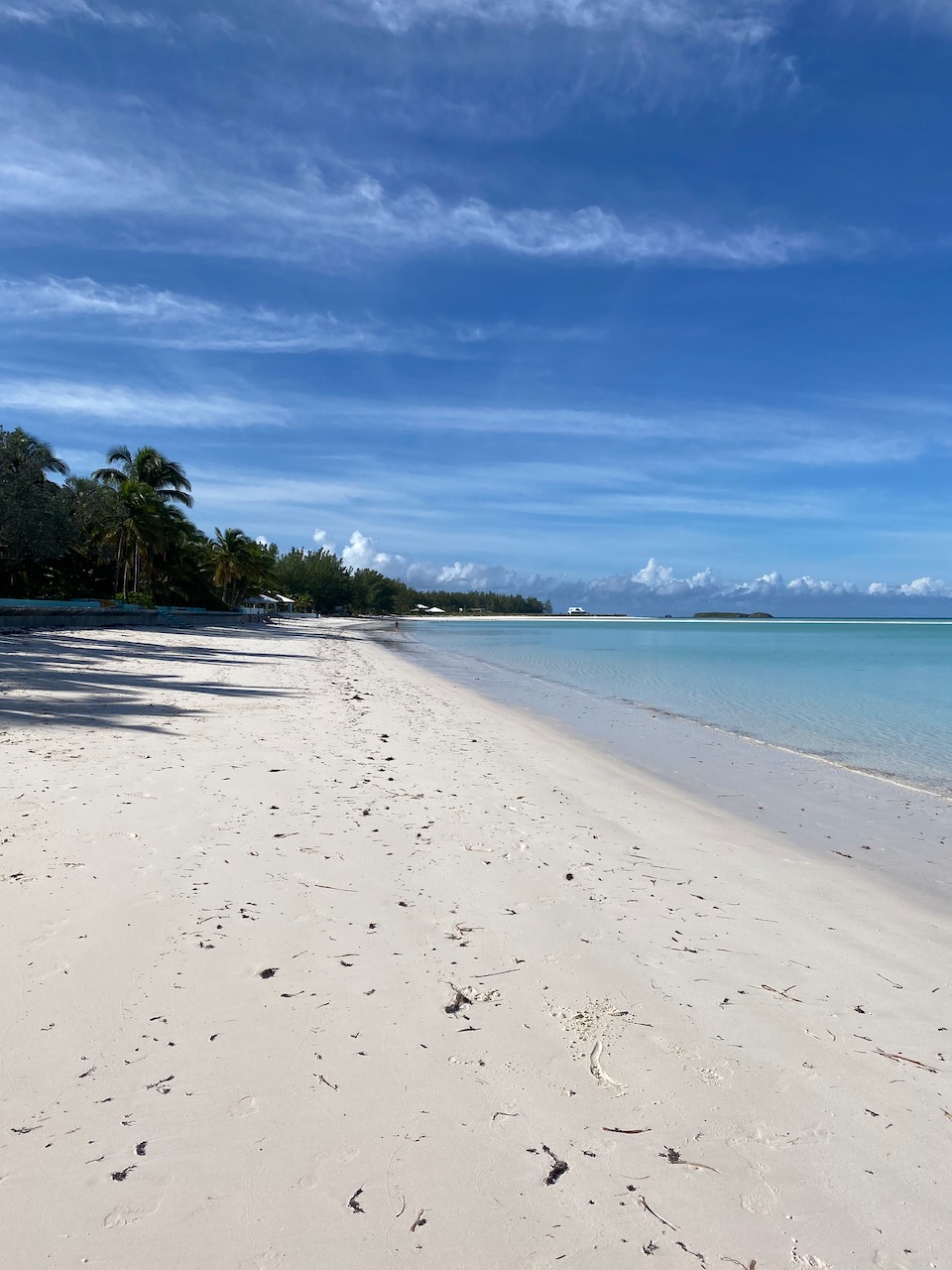
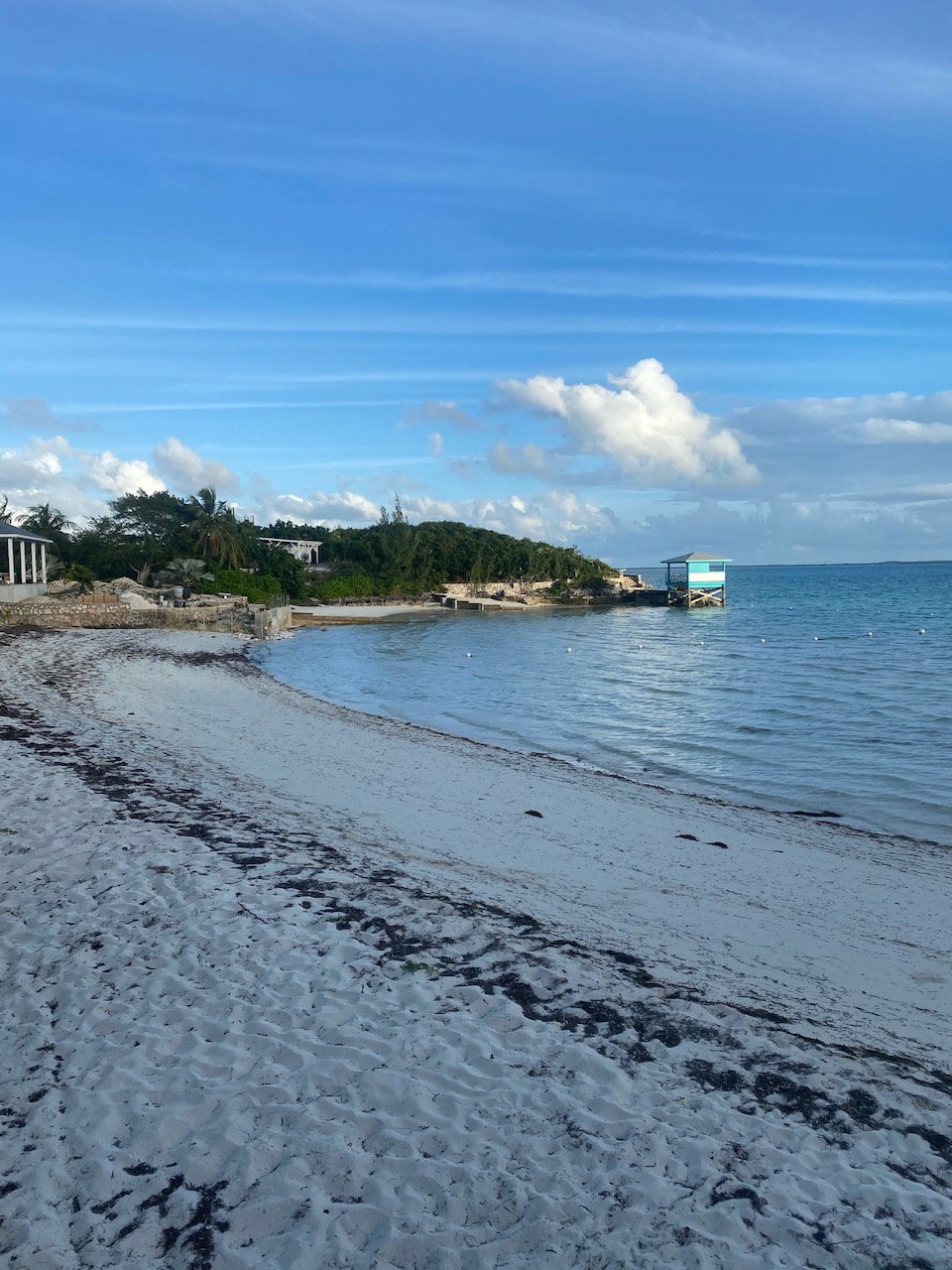

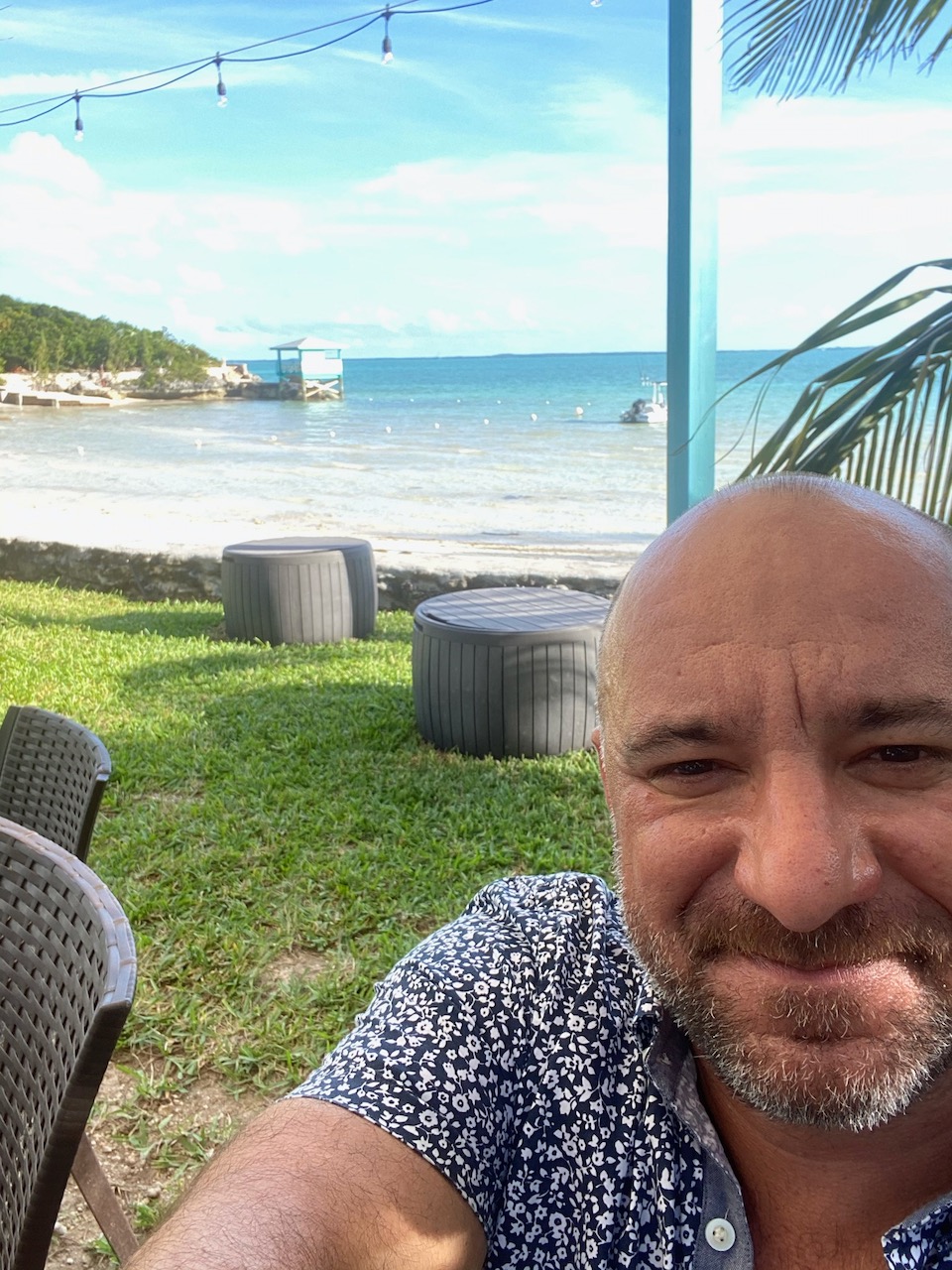
On Thursday, December 17, Flynn and I left Spanish Wells for the Eleuthra airport for a noon flight to Chicago. Dugard decided to camp out on the boat for the next couple days. We’ll have to fumigate the OG upon our return on Christmas Eve.
 Voyages of Olivia Grace
What a great adventure and an outstanding story. Well told and illustrated. Congratulations on the successful first step. Look forward to future updates.
LikeLike
Never would I have the guts to do this!
LikeLike